
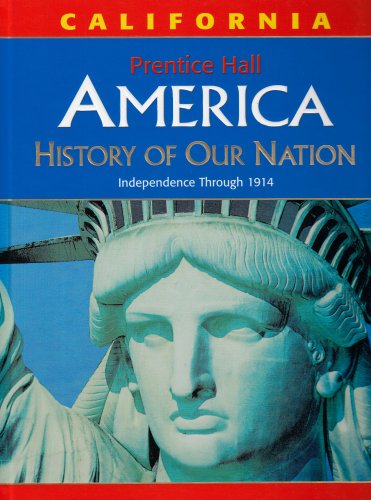
America: History of Our Nation
America: History of Our Nation is a Grade 8 United States history textbook published by Pearson/Prentice Hall that provides a comprehensive survey of American history from prehistoric Native peoples and early European exploration through the challenges of the early 21st century. The textbook covers major eras and events including colonial settlement, the American Revolution, the founding of the Constitution, westward expansion, the Civil War and Reconstruction, industrialization, both World Wars, the Great Depression, the Cold War, and the Civil Rights Movement. It is designed to give eighth-grade students a chronological understanding of how the United States developed politically, economically, and socially across more than five centuries of history.
Chapters & Lessons
Chapter 1: Roots of the American People (Prehistory-1500)
4 lessonsIn this Grade 8 lesson from America: History of Our Nation, students examine how the first people may have migrated to the Americas from Asia, exploring both the land-bridge theory and the coastal-route theory. Students also learn how early hunters transitioned to farming through techniques like irrigation, which led to surplus food production and the growth of complex societies. The lesson concludes with an introduction to the civilizations of the Mayas, Aztecs, and Incas as examples of advanced Native American cultures.
In this Grade 8 lesson from America: History of Our Nation, students explore the earliest cultures of North America, including the Mound Builders, Anasazi, and Hohokam, and examine how geography shaped their ways of life. Students learn key concepts such as culture areas, oral tradition, and trade practices like the use of currency, and discover how Native American groups met their basic needs through farming, hunting, and commerce. The lesson also covers shared spiritual beliefs, such as the Green Corn Ceremony and kachina traditions, connecting geography and culture across North American regions.
In this Grade 8 lesson from America: History of Our Nation, students examine how Muslim merchants, East African trading states like Zimbabwe and Kilwa, and China's maritime routes under Zheng He shaped interconnected trade networks across Asia, Africa, and Europe before 1500. Students explore key figures including Muhammad and Mansa Musa, and learn how Islam spread through conquest and commerce while Arab scholars advanced algebra, astronomy, and navigation technology. The lesson builds understanding of how long-distance trade transmitted goods, culture, and religion across three continents during the pre-Columbian era.
In this Grade 8 lesson from America: History of Our Nation, students explore the key foundations of European civilization, including the Judeo-Christian tradition, the concepts of monotheism and salvation, and how ancient Greece and Rome shaped ideas about direct democracy and republican government. Students also examine the impact of the Crusades and the Renaissance on European society and investigate why explorers like Vasco da Gama began looking beyond Europe's borders. The lesson is part of Chapter 1, which traces the roots of the American people from prehistory through 1500.
Chapter 2: Europe Looks Outward (1000-1720)
4 lessonsIn this Grade 8 lesson from America: History of Our Nation, students explore early European contact with the Americas, examining the Viking settlement at Newfoundland, the voyages of Christopher Columbus, and the expeditions of Spanish explorers Vasco Nunez de Balboa and Ferdinand Magellan. Students learn key terms such as circumnavigate and strait while tracing how Columbus's 1492 journey led to sustained transatlantic contact. The lesson concludes with an explanation of the Columbian Exchange and its lasting impact on both the Americas and Europe.
In this Grade 8 lesson from America: History of Our Nation, students learn how conquistadors Hernando Cortés and Francisco Pizarro defeated the Aztec and Inca empires, examining key factors such as superior European technology, horses, and divisions among Native American peoples. The lesson also covers Spanish exploration in North America and the organization of colonial society through systems like the encomienda and missions.
In this Grade 8 lesson from America: History of Our Nation, students examine how the Protestant Reformation created religious and economic tensions among European powers, driving competition for wealth and colonial territory. Students learn how the system of mercantilism motivated nations like Spain to seek overseas colonies, and trace the voyages of John Cabot and Henry Hudson as they searched for a northwest passage around the Americas. The lesson builds skills in identifying implied main ideas while connecting European conflicts to early struggles for control of North America.
In this Grade 8 lesson from America: History of Our Nation, students examine how France established New France through the fur trade and the explorations of Samuel de Champlain, Jacques Marquette, and Louis Joliet along the St. Lawrence River and Mississippi River. The lesson also covers how the Dutch built a colony along the Hudson River and how both French and Dutch settlements shaped alliances and relationships with Native American peoples. Students practice the reading skill of combining main ideas to construct meaning across the chapter's key concepts.
Chapter 3: Colonies Take Root (1587-1752)
5 lessonsIn this Grade 8 lesson from America: History of Our Nation, students examine why England sought colonies in North America and trace the founding of the first permanent English settlement at Jamestown in 1607, including the hardships colonists faced from disease, poor leadership, and food shortages. Students also explore how the Pilgrims established Plymouth Colony and relied on figures like Squanto and representative government to survive, contrasting the purposes and conditions of these early settlements.
In this Grade 8 lesson from America: History of Our Nation, students explore the geography and climate of the New England Colonies, including the region's rocky soil, dense forests, and rich fishing grounds that shaped colonial life. The lesson covers the Puritan settlement of Massachusetts Bay under John Winthrop, the concept of religious toleration, and how figures like Roger Williams, Anne Hutchinson, and Thomas Hooker sparked the founding of new colonies. Students also examine town meetings, conflicts such as King Philip's War with Metacom, and the broader changes that transformed New England society throughout the 1600s.
In this Grade 8 lesson from America: History of Our Nation, students explore the Middle Colonies — New York, Pennsylvania, New Jersey, and Delaware — examining how geography, climate, and fertile soil shaped the region into a productive farming area. The lesson covers the transition of New Netherland into New York under English rule, the establishment of proprietary and royal colonies in New Jersey, and the Quaker foundations of Pennsylvania and Delaware. Students also practice identifying comparison and contrast signal words as a reading comprehension skill.
In this Grade 8 lesson from America: History of Our Nation, students examine the geography, climate, and founding of the five Southern Colonies — Maryland, Virginia, North Carolina, South Carolina, and Georgia — including key figures such as Nathaniel Bacon, Lord Baltimore, and James Oglethorpe. Students explore how the Tidewater region's warm climate and long growing season drove the expansion of tobacco and rice plantations and contributed to the rise of slavery. The lesson also covers Bacon's Rebellion and the contrasting ways of life in the Tidewater and backcountry regions.
In this Grade 8 lesson from America: History of Our Nation, students learn how Spain established its earliest permanent European settlements in North America, including St. Augustine in Florida and Santa Fe in New Mexico, and how these borderlands functioned as a buffer to protect Spain's Mexican territories. Students examine the role of Spanish missions, presidios, and pueblos in expanding colonial control across Florida, Texas, New Mexico, and California, and explore the impact of Spanish rule on Native American communities. The lesson also develops the reading skill of comparing and contrasting Spanish colonial settlements with the English colonies covered earlier in Chapter 3.
Chapter 4: Life in the Colonies (1650-1750)
4 lessonsIn this Grade 8 lesson from America: History of Our Nation, students examine how English political traditions such as the Magna Carta, Parliament, the English Bill of Rights, and habeas corpus shaped colonial government in the 13 colonies. The lesson covers key concepts including the role of colonial legislatures, freedom of the press as established through the John Peter Zenger case, and how the Navigation Acts influenced the colonial economy. Students also explore the rights of English subjects, including protections like trial by jury and the significance of a bill of rights.
In this Grade 8 lesson from America: History of Our Nation, students explore colonial society between 1650 and 1750, examining how most colonists lived on farms within extended families and relied on self-sufficiency for survival. Students learn the clearly defined roles of men, women, and children in colonial households, as well as the class distinctions that shaped colonial life, including the gentry, middle class, indentured servants, and apprentices. The lesson draws from Chapter 4 to help students understand how a shared colonial culture developed despite regional and social differences.
Grade 8 students explore the origins and expansion of the Atlantic slave trade in this lesson from Chapter 4 of America: History of Our Nation, examining the brutal conditions of the Middle Passage and the triangular trade route connecting New England, West Africa, and the Caribbean. Students learn how slavery became embedded in the colonial economy and identify the key terms racism and slave codes that defined the legal restrictions placed on enslaved Africans. The lesson also addresses how African culture shaped American culture despite the severe hardships enslaved people endured.
Grade 8 students in America: History of Our Nation explore the spread of new ideas in colonial America (1650–1750), examining how Puritan beliefs shaped public schools, dame schools, and compulsory education laws. The lesson covers key figures such as Anne Bradstreet, Phillis Wheatley, Benjamin Franklin, and Jonathan Edwards, as well as the religious revival known as the Great Awakening. Students also analyze Enlightenment concepts including natural rights, divine right, and separation of powers, and their influence on colonial society.
Chapter 5: The Road to Revolution (1745-1776)
4 lessonsIn this Grade 8 lesson from America: History of Our Nation, students examine the causes of the French and Indian War, focusing on the competing territorial claims over the Ohio River valley that brought France and Britain into conflict. Students learn about George Washington's early role commanding the Virginia militia, the significance of Fort Duquesne and Fort Necessity, and the failed attempt at colonial cooperation through the Albany Plan of Union. The lesson also develops the reading skill of making inferences from historical evidence and actions.
Grade 8 students studying Chapter 5 of America: History of Our Nation examine how British efforts to impose new taxes and controls after the French and Indian War led to colonial resistance. The lesson covers Pontiac's War and the Proclamation of 1763, colonial responses to British tax laws including boycotts and petitions, and the events of the Boston Massacre. Students also practice the reading skill of supporting inferences with text details as they analyze the growing tension between Britain and the American colonies.
In this Grade 8 lesson from America: History of Our Nation, students examine the escalating conflict between American colonists and Britain, tracing the causes of the Boston Tea Party, the colonial response to the Intolerable Acts, and the opening battles at Lexington and Concord on April 19, 1775. Key terms including monopoly, repeal, and minuteman help students understand how British policies like the Tea Act and the Quebec Act pushed colonists from peaceful protest toward armed rebellion. The lesson also develops the reading skill of drawing logical conclusions from historical evidence.
In this Grade 8 lesson from America: History of Our Nation, students examine the role of the Second Continental Congress as it formed the Continental Army under George Washington and grappled with whether to pursue independence or reconciliation with Britain. Students also analyze the differences between Patriots and Loyalists, exploring why colonists chose opposing sides as tensions escalated into armed conflict. Key concepts include the Olive Branch Petition, the significance of the Battle of Bunker Hill, and vocabulary terms such as blockade and mercenary.
Chapter 6: The American Revolution (1776-1783)
4 lessonsIn this Grade 8 lesson from America: History of Our Nation, students examine how Thomas Paine's pamphlet Common Sense built colonial support for independence and how Richard Henry Lee's resolution moved Congress toward a formal break with Britain. Students also analyze the structure of the Declaration of Independence, including its preamble and grievances, and the role Thomas Jefferson played in drafting it.
In this Grade 8 lesson from America: History of Our Nation, students examine the American Revolution's critical 1776–1777 campaigns, including the Battle of Long Island, Washington's famous crossing of the Delaware River, and the Battle of Saratoga as a turning point in the war. Students also learn how foreign alliances and volunteers such as the Marquis de Lafayette and Friedrich von Steuben strengthened the Continental army. The lesson covers key figures like spy Nathan Hale and explores the role of mercenaries fighting for the British.
In this Grade 8 lesson from America: History of Our Nation, students examine how the American Revolution extended beyond major battlefields to affect a broader range of participants, including the approximately 7,000 African Americans who served on the American side and the enslaved people who joined the British in exchange for freedom. Students also explore the hardships faced by civilians and women on the home front, as well as military campaigns on the western frontier led by figures like George Rogers Clark and naval conflicts involving privateers and commander John Paul Jones. The lesson draws on key terms such as enlist, civilian, and continental to build vocabulary alongside historical understanding.
In this Grade 8 lesson from America: History of Our Nation, students explore how the American Revolution ended with the Patriot victory at Yorktown, tracing the shift of fighting to the Southern states and the use of guerrilla tactics by figures like Francis Marion. Students examine key turning points such as the Battle of Cowpens, the betrayal of Benedict Arnold, and the leadership of General Nathanael Greene. The lesson also covers the terms of the peace treaty with Britain and analyzes the broader effects of the Revolution on the new nation.
Chapter 7: Creating the Constitution (1776-1790)
3 lessonsIn this Grade 8 lesson from America: History of Our Nation, students examine how the first state constitutions were designed after the American Revolution, including the role of the executive, the structure of state legislatures, and the inclusion of bills of rights protecting freedoms such as religion and trial by jury. The lesson also covers the Articles of Confederation, the Ordinances of 1785 and 1787, and the problems that arose from a weak central government. Key figures like Daniel Shays and concepts such as economic depression are introduced to help students understand the challenges of governing the new nation.
In this Grade 8 lesson from America: History of Our Nation, students examine the proceedings of the Constitutional Convention of 1787, including the Virginia Plan's proposal for three branches of government — legislative, executive, and judicial. Students learn how the Great Compromise resolved tensions between large and small states and explore the disputes over slavery that shaped the drafting of the new Constitution. The lesson builds on prior knowledge of the Articles of Confederation's weaknesses to explain why delegates ultimately created an entirely new framework of government.
In this Grade 8 lesson from America: History of Our Nation, students compare the positions of the Federalists and Antifederalists, examining key arguments over ratifying the Constitution including debates about federal power, states' rights, and the absence of a bill of rights. Students explore the Federalist Papers by Madison, Hamilton, and Jay alongside Antifederalist objections raised by figures like George Mason and Patrick Henry. The lesson also covers the state-by-state ratification process and how the Bill of Rights was added to address concerns about protecting individual freedoms.
Chapter 8: Launching a New Nation (1789-1800)
4 lessonsIn this Grade 8 lesson from America: History of Our Nation, students learn how George Washington organized the new federal government, including the creation of the Cabinet, the Treasury, State, and War departments, and the federal judiciary under the Judiciary Act of 1789. The lesson also covers the economic crisis facing the new nation, Hamilton's financial plan, and Washington's response to the Whiskey Rebellion. Key vocabulary includes inauguration, precedent, bond, speculator, and tariff within the context of Chapter 8: Launching a New Nation (1789–1800).
In this Grade 8 lesson from America: History of Our Nation, students learn how the United States' first two political parties — the Republicans and the Federalists — emerged in the early 1790s despite the Founding Fathers' opposition to factions. Students compare the core beliefs of each party, including their contrasting views on federal versus state power, interpretation of the Constitution, and economic priorities under leaders like Thomas Jefferson and Alexander Hamilton. The lesson concludes by examining how these rivalries shaped the election of 1796.
In this Grade 8 lesson from America: History of Our Nation, students examine the conflicts between American settlers and Native American nations in the Northwest Territory, including the Battle of Fallen Timbers and the Treaty of Greenville. Students also explore how the French Revolution divided American opinion and led Washington to declare U.S. neutrality as Britain and France went to war. The lesson concludes with an analysis of Washington's Farewell Address and his key accomplishments as the nation's first president.
Grade 8 students studying Chapter 8 of America: History of Our Nation examine the presidency of John Adams, focusing on the XYZ Affair, U.S.-France tensions, and the undeclared naval war of 1798–1800. The lesson covers the key provisions of the Alien and Sedition Acts, including the concepts of sedition and nullification, and explores the debate over states' rights sparked by the Kentucky and Virginia Resolutions. Students also practice identifying analogies as a reading skill while analyzing how Adams navigated foreign policy crises to achieve a peaceful resolution with France.
Chapter 9: The Era of Thomas Jefferson (1800-1815)
4 lessonsIn this Grade 8 lesson from America: History of Our Nation, students examine the contested election of 1800, in which Thomas Jefferson and Aaron Burr tied in electoral votes and the House of Representatives decided the presidency over 36 ballots. Students also explore Jefferson's laissez faire governing philosophy, his efforts to reduce federal power and military spending, and the landmark Supreme Court case Marbury v. Madison, which established the principle of judicial review. The lesson builds sequencing skills by tracing how Jefferson's "Revolution of 1800" shifted the country away from Federalist policies.
In this Grade 8 lesson from America: History of Our Nation, students examine how the United States acquired the Louisiana Territory in 1803, exploring the crisis over New Orleans port access, the Pinckney Treaty with Spain, and Napoleon's surprise offer to sell the entire territory for $15 million. Students also trace the Lewis and Clark expedition and other explorations that followed, learning how the purchase doubled the size of the young nation and opened the path for westward expansion.
In this Grade 8 lesson from America: History of Our Nation, students examine the key conflicts shaping U.S. foreign policy during the Jefferson era, including how Stephen Decatur and American forces defeated the Barbary pirates to end tribute payments, how British impressment and the seizure of American ships by both Britain and France threatened neutral trade, and how Jefferson responded with the Embargo Act. Students also trace the events leading to the Battle of Tippecanoe, including the rise of Tecumseh and growing tensions with Native American confederacies. The lesson builds cause-and-effect reading skills by connecting these events within the broader context of Chapter 9: The Era of Thomas Jefferson (1800–1815).
In this Grade 8 lesson from America: History of Our Nation, students examine the causes and early events of the War of 1812, including the roles of nationalism, impressment, and war hawks like Henry Clay and John C. Calhoun in pushing Congress to declare war on Britain. Students trace key early developments such as the British naval blockade of American ports and the USS Constitution's victory over the Guerriere, learning to relate these events in chronological sequence. The lesson also covers the American invasion of Canada, fighting in the South under Andrew Jackson, and the factors that brought the conflict to an end.
Chapter 10: A Changing Nation (1815-1840)
5 lessonsIn this Grade 8 lesson from America: History of Our Nation, students explore the Era of Good Feelings following the War of 1812, examining how President Monroe's presidency fostered national unity and the collapse of the Federalist Party. Students analyze key figures Henry Clay, John C. Calhoun, and Daniel Webster as regional spokespersons and study economic policies including tariffs, the second Bank of the United States, and interstate commerce. The lesson also builds the reading skill of identifying cause-and-effect relationships in historical events.
In this Grade 8 history lesson from America: History of Our Nation, students explore how the United States expanded its influence in the early 1800s, including why Spain ceded Florida through the Adams-Onis Treaty of 1819 and the role Andrew Jackson played in that transfer. Students also examine the independence movements that swept Latin America, led by figures such as Miguel Hidalgo and Simón Bolívar, and learn why the United States issued the Monroe Doctrine to limit further European involvement in the Americas. The lesson is part of Chapter 10, covering the changing nation between 1815 and 1840.
In this Grade 8 lesson from America: History of Our Nation, students examine the Age of Jackson, exploring how Andrew Jackson's rise to the presidency transformed American political life in the 1820s and 1830s. The lesson covers key developments including the disputed Election of 1824, the "corrupt bargain" controversy between Adams and Clay, and the expansion of suffrage to nearly all adult white males. Students also analyze short-term effects of political events and learn essential terms such as caucus, nominating convention, and the spoils system.
In this Grade 8 lesson from America: History of Our Nation, students examine the culture of Southeastern Native American nations — including the Cherokee, Choctaw, Chickasaw, Creek, and Seminole — and the growing conflict over their lands during the 1820s and 1830s. Students learn how federal and state policies, including Georgia's forced land cession laws and President Andrew Jackson's push for removal, led to the displacement of more than 100,000 Native Americans. The lesson also covers landmark Supreme Court cases Cherokee Nation v. Georgia and Worcester v. Georgia, helping students analyze the long-term effects of Indian Removal on both Native peoples and American history.
In this Grade 8 lesson from America: History of Our Nation, students examine the major political and economic conflicts of the Jacksonian era, including the Bank War between Andrew Jackson and the second Bank of the United States, the doctrine of nullification, and South Carolina's threat to secede from the Union. Students analyze the competing arguments over the balance of federal and state powers under the Tenth Amendment and trace the multiple causes of the economic crisis of 1837. The lesson builds students' historical thinking skills by identifying how overlapping causes — from currency policy to states' rights disputes — shaped a rapidly changing nation between 1815 and 1840.
Chapter 11: The North and South Take Different Paths (1800-1845)
4 lessonsIn this Grade 8 lesson from America: History of Our Nation, students learn how the Industrial Revolution transformed American life by shifting work from home-based production to the factory system, powered first by water and then by steam engines. The lesson covers key concepts including the factory system, capitalists, mass production, and interchangeable parts, as well as the significance of Samuel Slater's cotton mill in bringing British industrial methods to the United States. Students also examine how inventions like the water frame and the spinning jenny dramatically increased textile output and reshaped labor conditions after 1812.
In this Grade 8 lesson from America: History of Our Nation, students examine how the Industrial Revolution transformed the North between 1800 and 1845, exploring key concepts including urbanization, the invention of Samuel Morse's telegraph and Morse code, and the challenges of rapid city growth such as disease, poor sanitation, and fire. Students also analyze the wave of Irish and German immigration in the 1840s and 1850s and the discrimination faced by African Americans in Northern cities. The lesson connects industrialization to broader social and urban problems, helping students understand the distinct path the North took compared to the South during this period.
In this Grade 8 lesson from America: History of Our Nation, students examine how Eli Whitney's cotton gin transformed Southern agriculture by making cotton production dramatically more profitable and driving a massive expansion of slave labor between 1790 and 1860. Students also explore the social structure of the plantation South, including the slave codes, the daily lives of enslaved African Americans, and the growing divide between pro-slavery Southerners and their critics. The lesson connects economic forces to human consequences, helping students understand how technological innovation shaped both regional identity and one of America's most troubling historical institutions.
In this Grade 8 lesson from America: History of Our Nation, students examine the challenges Americans faced during westward expansion in the early 1800s, including poor road conditions, the development of turnpikes and corduroy roads, and the construction of the Erie Canal. The lesson also covers the Missouri Compromise and the growing debate over slavery as new states joined the Union. Key figures such as Daniel Boone and Henry Clay are introduced within the context of Chapter 11's broader exploration of how the North and South developed differently between 1800 and 1845.
Chapter 12: An Age of Reform (1820-1860)
4 lessonsIn this Grade 8 lesson from America: History of Our Nation, students explore the political and religious forces that inspired the social reform movement of the 1820s–1860s, including Jacksonian Democracy and the Second Great Awakening. Students identify key reformers such as Charles Finney and Dorothea Dix and examine the specific problems they addressed, from alcohol abuse to the treatment of people with mental illness. The lesson also traces improvements in public education during this era, with figures like Horace Mann shaping the rise of the American public school system.
In this Grade 8 lesson from America: History of Our Nation, students examine the abolitionist movement in the antebellum United States, exploring how northern states gradually eliminated slavery after the American Revolution and how reformers like William Lloyd Garrison, Frederick Douglass, and Harriet Tubman organized to demand an immediate end to slavery. Students analyze the roles of key figures and organizations such as the American Anti-Slavery Society and the Underground Railroad, as well as the colonization movement and its failure. The lesson also challenges students to understand why many Americans in both the North and South defended or opposed slavery during this era of reform from 1820 to 1860.
Grade 8 students explore the origins of the women's rights movement in this lesson from America: History of Our Nation, learning how key figures like Sojourner Truth, Lucretia Mott, and Elizabeth Cady Stanton drew on their abolitionist experience to demand equal citizenship. The lesson examines the goals of the 1848 Seneca Falls Convention, including Stanton's Declaration of Sentiments, and introduces the concept of women's suffrage. Students also identify new opportunities women began to gain in the mid-1800s as the organized women's rights movement took shape.
In this Grade 8 lesson from America: History of Our Nation, students explore how American writers and artists of the mid-1800s broke from European influences to develop uniquely American styles and themes. The lesson covers key figures and concepts including transcendentalism, Ralph Waldo Emerson's philosophy of individualism, Henry David Thoreau's civil disobedience, and the literary works of Herman Melville, Nathaniel Hawthorne, and Louisa May Alcott. Students also examine the emergence of distinctly American movements in visual art and music during the same period.
Chapter 13: Westward Expansion (1820-1860)
4 lessonsIn this Grade 8 lesson from America: History of Our Nation, students explore the concept of the western frontier in the early 1800s, identifying key destinations such as Oregon Country and the Southwest's Spanish Borderlands. Students examine the distinct culture of the Southwest, shaped by Spanish and Mexican rule, mercantilism, and the blending of peninsulares, creoles, and mestizos. The lesson also introduces the idea of Manifest Destiny and its role in driving American westward expansion beyond the Great Plains.
In this Grade 8 lesson from America: History of Our Nation, students examine the key events and tensions that led to Texas independence from Mexico, including Santa Anna's dictatorship, the siege of the Alamo, and Sam Houston's victory at San Jacinto. Students also analyze the debate over annexing Texas and Oregon, the causes and major events of the Mexican-American War, and how the concept of Manifest Destiny shaped U.S. territorial expansion from 1820 to 1860. The lesson introduces key terms such as dictatorship, siege, annex, and cede within the broader context of Chapter 13 on Westward Expansion.
In this Grade 8 lesson from America: History of Our Nation, students examine two major westward movements of the mid-1800s: the Mormon migration to the Great Salt Lake valley under Brigham Young and the conflicts over polygamy and governance that delayed Utah statehood until 1896, and the effects of the 1849 California gold rush on population growth and settlement. Students learn key terms including forty-niner, water rights, and vigilante as they analyze how the Mexican Cession opened vast new territory to American settlers.
Chapter 14: The Nation Divided (1846-1861)
4 lessonsIn this Grade 8 lesson from America: History of Our Nation, students examine how the Mexican-American War reignited the slavery debate by threatening the balance between free and slaveholding states, exploring key concepts such as the Wilmot Proviso, popular sovereignty, and the formation of the Free-Soil Party. Students also analyze Henry Clay's Compromise of 1850 and the contrasting positions of John C. Calhoun and Daniel Webster as the North and South moved closer to crisis over the expansion of slavery into new territories.
In this Grade 8 lesson from America: History of Our Nation, students examine how the Compromise of 1850 — including the controversial Fugitive Slave Act — failed to resolve sectional tensions over slavery. Students analyze the impact of Harriet Beecher Stowe's Uncle Tom's Cabin and explain how the Kansas-Nebraska Act reignited the slavery debate in the territories. The lesson builds skills in identifying cause-and-effect relationships among key events of the 1850s leading up to the Civil War.
In this Grade 8 lesson from America: History of Our Nation, students examine the multiple causes and effects that led to the outbreak of the Civil War, including the four-way presidential election of 1860, the secession of southern states, and the formation of the Confederate States of America. Students analyze how Abraham Lincoln's election shattered sectional tensions, prompting South Carolina and six other states to leave the Union and establish a rival government under Jefferson Davis. The lesson builds key historical thinking skills by tracing how sectionalism, slavery debates, and political fragmentation combined to divide the nation by 1861.
Chapter 15: The Civil War (1861-1865)
5 lessonsIn this Grade 8 lesson from America: History of Our Nation, students examine the opening phase of the Civil War by identifying which states supported the Union, joined the Confederacy, or remained border states with divided loyalties. Students analyze the advantages each side held, compare the military strategies of the North and South, and explore how Lincoln used measures such as martial law to keep key border states in the Union. The lesson also covers the outcome of the First Battle of Bull Run and the conditions soldiers faced in camp.
In this Grade 8 lesson from America: History of Our Nation, students examine how new weapons technology — including more accurate rifles, long-range cannons, and ironclad warships — forced Civil War commanders to rethink traditional battlefield tactics. The lesson traces key events in the East during 1862, including General George McClellan's cautious Peninsula Campaign and the famous naval clash between the ironclads Monitor and Merrimack. Students practice sequencing historical events to understand the setbacks both Union and Confederate forces faced in the early years of the war.
In this Grade 8 lesson from America: History of Our Nation, students examine why President Lincoln issued the Emancipation Proclamation, including his initial reluctance due to concerns about border states and his eventual decision to embrace emancipation as a war measure. Students analyze the proclamation's limited immediate reach — applying only to enslaved people in Confederate-held territory — alongside its broader effect of transforming the Civil War into a fight to end slavery. The lesson also covers the contributions of African Americans to the Union cause during this pivotal period of the war.
In this Grade 8 lesson from America: History of Our Nation, students examine how the Civil War created divisions within both the North and the South, exploring key concepts such as habeas corpus, the military draft, inflation, and the suspension of civil liberties by Lincoln and Jefferson Davis. Students also analyze the economic hardships faced by civilians, the role of Copperheads in opposing the Union war effort, and the contributions women made to both sides during the conflict.
In this Grade 8 lesson from America: History of Our Nation, students examine the significance of the Union victories at Gettysburg and Vicksburg in 1863, including the strategic importance of Pickett's Charge and the siege tactics that forced Vicksburg to surrender. Students also learn how General William Tecumseh Sherman's strategy of total war helped bring the Confederacy to defeat and ultimately end the Civil War by 1865.
Chapter 16: Reconstruction and the New South (1863-1896)
3 lessonsIn this Grade 8 lesson from America: History of Our Nation, students examine the early challenges of Reconstruction following the Civil War, comparing Lincoln's Ten Percent Plan with the stricter Wade-Davis Bill proposed by Radical Republicans in Congress. Students also explore the goals of the Freedmen's Bureau, which provided emergency relief, education, and economic assistance to freed slaves and displaced war refugees. The lesson concludes with the immediate political impact of Lincoln's assassination on Reconstruction efforts.
In this Grade 8 lesson from America: History of Our Nation, students examine the clash between President Andrew Johnson's lenient Reconstruction plan and the Radical Republicans in Congress, including the passage of black codes, the Thirteenth and Fourteenth Amendments, and the Civil Rights Act of 1866. Students also learn how Congress pursued impeachment of President Johnson and how groups like the Ku Klux Klan used violence to suppress African American rights in the post-Civil War South.
In this Grade 8 lesson from America: History of Our Nation, students examine why support for Reconstruction declined, focusing on the Compromise of 1877 that brought Rutherford B. Hayes to the presidency and ended federal oversight of the South. Students analyze how southern states systematically stripped African Americans of civil rights through poll taxes, literacy tests, grandfather clauses, and segregation laws. The lesson also covers the sharecropping system and how it trapped formerly enslaved people in a cycle of debt and poverty as the South began rebuilding its economy by the 1880s.
Frequently Asked Questions
- Is America: History of Our Nation the right textbook for my 8th grader?
- America: History of Our Nation by Pearson/Prentice Hall is a standard Grade 8 U.S. history textbook widely used in middle schools across the country. It is a good fit if your child needs a comprehensive chronological survey of American history from prehistory through the early 21st century. The book covers all the major eras and events required by most state standards, including the Revolution, Constitution, Civil War, both World Wars, the Cold War, and the Civil Rights Movement. It reads at an appropriate level for 8th graders and includes reading skill instruction alongside historical content, making it suitable for a wide range of student abilities.
- Which chapters or topics in America: History of Our Nation tend to be the hardest?
- Chapter 13 (The Civil War) and Chapter 14 (Reconstruction) are consistently the most demanding because students must track multiple causes, military turning points, political debates, and social consequences simultaneously. The constitutional and governmental debates in Chapter 6 (Creating the Constitution) — the competing plans, the Great Compromise, ratification debates between Federalists and Anti-Federalists — also confuse many students. Chapters covering the Industrial Revolution and Progressive Era are dense with economic vocabulary and social reform movements. Students who struggle with reading comprehension often hit their wall in the later Civil War and early 20th-century chapters.
- My child is weak on the Colonial and Revolution period — where should they begin?
- Start with Chapter 3 (Colonies Take Root), which covers the founding of all three colonial regions clearly in Lessons 2-4. Then work through Chapter 4 (Life in the Colonies) to understand colonial society, government traditions like the Magna Carta, and the seeds of self-governance before jumping into Chapter 5 (The Road to Revolution). Many students find Chapter 5 confusing because they don't understand why colonists resisted British taxes — that context comes from Chapter 4 Lesson 1. Building this foundation makes the Revolution story in Chapter 6 and the Constitutional Convention in Chapter 7 make much more sense.
- What should my child study after finishing America: History of Our Nation?
- After completing this Grade 8 survey, students are typically ready for high school U.S. History, which revisits the same chronological arc in greater depth and with more primary source analysis. The document-analysis skills developed throughout this textbook — especially working with the Declaration of Independence, Constitution, and key speeches — directly prepare students for AP U.S. History or honors-level high school history courses. Students who are particularly strong in this course might also explore AP Government and Politics or AP World History as high school electives, building on the comparative and constitutional thinking developed in Chapters 1-7.
- How can Pengi help my child with America: History of Our Nation?
- Pengi is excellent for review sessions before chapter tests when there are a lot of names, events, and dates to keep straight. If your child cannot remember the sequence leading to the Civil War across Chapters 12-13, Pengi can generate a quick question-and-answer review session covering key causes, compromises, and turning points in order. For the difficult constitutional chapters, Pengi can explain the Federalist-Anti-Federalist debate using clear analogies and then quiz your child on the key arguments. Pengi can also help with document-based questions by asking your child to analyze a historical source and then providing feedback on their reasoning — a critical skill for high school history.
Ready to start learning?
Jump into your first lesson for America: History of Our Nation. Free, no account required.
Start Learning