
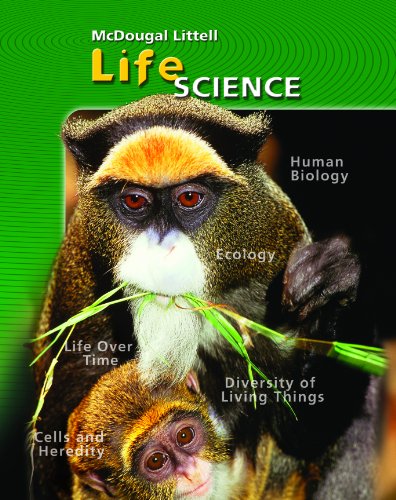
Life Science (Grade 7)
Life Science is a Grade 7 science textbook that provides a comprehensive introduction to the living world, covering foundational topics from cell structure and function, DNA, genetics, and heredity to cell division and the history of life on Earth. Students explore the diversity of life through the classification of organisms, single-celled life, viruses, plants, invertebrates, and vertebrates, before advancing to body systems including support, movement, transport, digestion, and reproduction in multicellular organisms. The textbook also examines ecology at multiple scales, addressing population dynamics, ecosystems, biomes, species interactions, and the human impact on natural environments.
Chapters & Lessons
Chapter 1: The Cell
3 lessonsIn this Grade 7 Life Science lesson from Chapter 1: The Cell, students explore how light microscopes, scanning electron microscopes (SEM), and transmission electron microscopes (TEM) are used to study cells, comparing their magnification levels and key advantages and disadvantages. Students also learn the foundations of cell theory and how cells are measured in micrometers. The lesson sets the stage for understanding prokaryotic and eukaryotic cells and the structures found inside them.
Chapter 2: How Cells Function
3 lessonsIn this Grade 7 Life Science lesson from Chapter 2, students learn how cells capture and release energy through the processes of photosynthesis and cellular respiration. Students explore how chlorophyll in plant chloroplasts converts sunlight, carbon dioxide, and water into glucose, and how both plant and animal cells release chemical energy stored in glucose to fuel their activities. The lesson also introduces fermentation as an additional pathway for energy release, building students' understanding of how all living cells meet their energy needs.
In this Grade 7 Life Science lesson from Chapter 2, students learn how materials move into and out of cells through the cell membrane using processes such as diffusion, osmosis, passive transport, and active transport. The lesson explains how concentration gradients drive diffusion and explores the role of energy in active versus passive transport. Students also examine how a cell's surface area affects the efficiency of material transport.
Chapter 3: Cell Division
3 lessonsIn this Grade 7 Life Science lesson from Chapter 3, students learn about the cell cycle and its two main phases: interphase, during which the cell grows and duplicates its DNA, and the cell division phase, which includes mitosis and cytokinesis. Students explore how mitosis divides the nucleus and cytokinesis splits the cytoplasm, resulting in two genetically identical daughter cells. The lesson builds foundational understanding of how cell division enables multicellular organisms to grow, develop, and repair themselves.
Grade 7 Life Science students explore how both asexual and sexual reproduction depend on cell division, examining specific methods such as binary fission in prokaryotes, mitosis and cytokinesis in single-celled eukaryotes, budding in organisms like hydras and yeast, and regeneration. The lesson explains how asexual reproduction produces offspring that are genetically identical to the single parent, and compares this process across unicellular and multicellular organisms. Part of Chapter 3 on Cell Division, this lesson builds on students' prior knowledge of mitosis to connect cell-level processes to organism-level reproduction.
Chapter 4: Patterns of Heredity
3 lessonsGrade 7 Life Science students learn how to use Punnett squares to predict patterns of heredity by mapping how alleles from each parent combine in potential offspring. The lesson also covers how to express genetic outcomes using ratios, percentages, and probability, illustrated through examples like Mendel's pea plant height crosses. This content is part of Chapter 4: Patterns of Heredity in the Grade 7 Life Science textbook.
In this Grade 7 Life Science lesson from Chapter 4: Patterns of Heredity, students learn how meiosis produces haploid (1n) gametes — egg and sperm cells — that each contain half the normal number of chromosomes found in diploid (2n) body cells. Students explore how meiosis differs from mitosis by involving two sequential divisions (meiosis I and meiosis II) that result in four haploid cells, and how fertilization combines two 1n gametes to restore the full 2n chromosome count in offspring. The lesson also introduces key vocabulary including gamete, diploid, haploid, homologs, and fertilization within the context of sexual reproduction.
Chapter 5: DNA and Modern Genetics
3 lessonsIn this Grade 7 Life Science lesson from Chapter 5, students learn how DNA stores genetic information as a sequence of nucleotide bases — adenine, thymine, cytosine, and guanine — and how that sequence forms a triplet code used to specify amino acids for building proteins. The lesson also introduces DNA replication and the role of RNA in transferring information from DNA to produce specific proteins in the cell. Part of the Life Science textbook's unit on modern genetics, this lesson builds on students' prior knowledge of traits, genes, and inheritance.
In this Grade 7 Life Science lesson from Chapter 5: DNA and Modern Genetics, students learn what mutations are, how changes in a DNA base sequence can occur through copying errors or environmental damage, and how mutations can produce no effect, minor changes, or significant outcomes such as genetic disorders. Students also explore how variation in genes — including those that code for proteins like melanin — accounts for differences in traits among individuals of the same species. The lesson introduces pedigrees as a tool for tracking inherited traits across generations.
In this Grade 7 Life Science lesson from Chapter 5: DNA and Modern Genetics, students explore how DNA technology allows scientists to alter organisms through selective breeding and genetic engineering, including the process of isolating and inserting DNA sequences across species to create transgenic organisms. Students also learn key concepts such as genomes, cloning, and real-world applications like pest-resistant crops. The lesson builds on prior knowledge of mutations and genetic disorders to examine both the possibilities and ethical issues surrounding modern DNA technology.
Chapter 6: The History of Life on Earth
3 lessonsIn this Grade 7 Life Science lesson from Chapter 6, students learn how fossils provide evidence of Earth's 3.8-billion-year history of life, exploring different types of fossils including bone, mineral replacement, and preserved remains. Students also examine how scientists determine the age of fossils using relative dating and absolute dating methods, including radioactivity measurements. The lesson also introduces key concepts such as unicellular and multicellular organisms and mass extinctions as patterns in the fossil record.
In this Grade 7 Life Science lesson from Chapter 6, students learn how species change over time through the process of biological evolution, including early ideas proposed by Lamarck and Charles Darwin's development of the theory of natural selection based on his observations of tortoises and finches in the Galapagos Islands. Students explore key concepts such as adaptation and speciation, examining how new species can arise from older ones through inherited genetic changes. The lesson builds on prior knowledge of fossils and mass extinctions to help students understand the mechanisms driving evolutionary change across generations.
In this Grade 7 Life Science lesson from Chapter 6, students explore the multiple lines of evidence that support the theory of evolution, including fossil evidence, vestigial organs, and similarities in biological structure. Students learn how scientists use common ancestors, structural comparisons, and ongoing field research to strengthen Darwin's theory of natural selection. The lesson also clarifies what distinguishes a scientific theory from everyday use of the word, helping students understand how observations and experiments build widely accepted scientific explanations.
Chapter 7: Classification of Living Things
3 lessonsIn this Grade 7 Life Science lesson from Chapter 7, students learn the key concepts of classification and taxonomy — the processes scientists use to organize and name living things based on their similarities and differences. Students explore why a reliable naming system is essential for scientific communication and how taxonomists use physical traits and DNA evidence to group organisms. The lesson uses real-world examples, such as caterpillars versus earthworms and the caracal cat, to illustrate how classification helps identify and understand unfamiliar species.
In this Grade 7 Life Science lesson from Chapter 7, students learn how biologists classify and name living things using the seven levels of classification and the system of binomial nomenclature developed by Carolus Linnaeus. Students explore the concept of genus and how two-part Latin scientific names are assigned to species. The lesson also introduces the dichotomous key as a tool for identifying organisms.
In this Grade 7 Life Science lesson from Chapter 7, students explore how taxonomy evolves as new discoveries are made, learning why species are reclassified over time. Students study the three domains — Bacteria, Archaea, and Eukarya — and the six kingdoms, including Plantae, Animalia, Protista, Fungi, Archaea, and Bacteria. The lesson also covers the key differences between prokaryotic and eukaryotic cells and how cell structure forms the basis for modern classification systems.
Chapter 8: Population Dynamics
3 lessonsIn this Grade 7 Life Science lesson from Chapter 8, students explore population dynamics, including the three stages of population change — growth, stability, and decline — and key concepts such as carrying capacity and population density. Students examine what causes populations to increase or decrease over time and analyze patterns of rapid versus gradual population growth. The lesson also connects to Charles Darwin's observations about population growth, resource limits, and genetic variation within species.
In this Grade 7 Life Science lesson from Chapter 8, students learn how limiting factors, immigration, and emigration affect population growth and stability. They explore the population change formula and examine how abiotic factors and competition between species can prevent a population from growing indefinitely. Students also investigate two reproductive strategies, opportunist and competitor, and how population density influences the pressures a population faces.
In this Grade 7 Life Science lesson from Chapter 8: Population Dynamics, students explore how human populations differ from other species by examining how habitat expansion and technology have increased Earth's carrying capacity for humans. Students learn how advances such as improved sanitation, medical care, and irrigation systems allow humans to overcome limiting factors that control other biological populations. The lesson also introduces the concept of pollution as students consider how rapid human population growth affects the environment.
Chapter 9: Single-Celled Organisms and Viruses
4 lessonsIn this Grade 7 Life Science lesson from Chapter 9, students explore how single-celled organisms such as bacteria and amoebas share the same four characteristics of all living things: organization, growth, reproduction, and response to the environment. Students learn key vocabulary including microorganism, kingdom, and binary fission, and examine how scientists classify life into six kingdoms ranging from microscopic organisms to plants, animals, and fungi. The lesson builds foundational understanding of cell-based life and the diversity of organisms across ecosystems.
In this Grade 7 Life Science lesson from Chapter 9, students explore bacteria and archaea as the simplest single-celled organisms on Earth, learning that bacteria lack a true nucleus and store genetic material in loops within the cell. Students examine how bacteria are classified by shape — spiral, rod, and round — and how they reproduce through binary fission. The lesson also introduces key vocabulary including producer, decomposer, and parasite to explain the roles bacteria play in helping or harming other organisms.
In this Grade 7 Life Science lesson from Chapter 9, students learn why viruses are classified as non-living things despite sharing some characteristics with living organisms, such as having genetic material enclosed in a protein coat called a capsid. Students explore how viruses differ from bacteria in size and structure, and how viruses rely on host cells to reproduce rather than doing so independently. The lesson builds on students' prior knowledge of single-celled organisms and living thing characteristics to explain how viruses cause disease and affect living cells.
In this Grade 7 Life Science lesson from Chapter 9, students explore protists as the most diverse group of organisms, examining specific examples such as algae, diatoms, euglena, and slime molds. Students learn how protists are classified by their three methods of obtaining energy: photosynthesis, consuming other organisms, and absorbing nutrients from their environment. A hands-on microscope investigation of pond water reinforces direct observation of these single-celled and multicellular organisms in their natural habitat.
Chapter 10: Introduction to Multicellular Organisms
4 lessonsIn this Grade 7 Life Science lesson from Chapter 10, students explore how multicellular organisms meet their needs through cell specialization and levels of biological organization, including tissues, organs, and organ systems. Students also learn how cells of the same type group together to form tissues, and how different tissues combine to form organs with specific functions. The lesson additionally introduces sexual reproduction, meiosis, and fertilization as key ways multicellular organisms reproduce and maintain diversity.
In this Grade 7 Life Science lesson from Chapter 10, students learn how plants capture sunlight and convert it to chemical energy through photosynthesis, producing sugars and oxygen from water and carbon dioxide. Students also explore how plants store energy as starch or sugar, and why plants are classified as autotrophs and producers. The lesson connects to hands-on investigations that challenge students to examine what materials plants actually need to grow.
In this Grade 7 Life Science lesson from Chapter 10, students learn that animals are consumers and heterotrophs that must obtain energy by eating other organisms, unlike plants that produce their own food. Students explore how animals are classified as herbivores, carnivores, or omnivores based on what they eat, and how digestion breaks down complex food compounds into simpler materials that cells can absorb. The lesson also covers animal behaviors such as predator-prey relationships, migration, and hibernation as ways animals respond to their environment.
In this Grade 7 Life Science lesson from Chapter 10, students learn how fungi obtain energy as decomposers by absorbing nutrients through threadlike structures called hyphae, and how the mycelium breaks down complex carbon compounds from dead organisms. Students also explore fungal reproduction through spores and examine different types of fungi, including multicellular species and single-celled yeasts. The lesson introduces key vocabulary — hyphae, spore, and lichen — and includes a hands-on mushroom investigation to observe spore-producing structures firsthand.
Chapter 11: Plants
4 lessonsIn this Grade 7 Life Science lesson from Chapter 11, students explore plant diversity and the shared characteristics that define all plants, including their multicellular structure, cell walls, and role as producers. Students also learn how root systems and shoot systems work together to transport water, nutrients, and energy-rich compounds, and are introduced to key vocabulary including vascular system and transpiration.
In this Grade 7 Life Science lesson from Chapter 11: Plants, students explore how mosses and ferns are adapted to moist environments, tracing the evolutionary transition of plant ancestors from aquatic algae to land-dwelling organisms. Students learn the differences between nonvascular plants like mosses and vascular plants like ferns, including how each group reproduces and why they depend on water-rich habitats. The lesson also covers key concepts such as photosynthesis, autotrophs, and the fossil evidence that places the first land plants on Earth approximately 475 million years ago.
In this Grade 7 Life Science lesson from Chapter 11: Plants, students learn how seeds and pollen function as reproductive adaptations that give seed plants survival advantages over spore-producing plants like mosses and ferns. The lesson covers key concepts including seed structure, embryo development, germination, pollination, and how pollen grains protect and transport sperm cells. Students also compare the characteristics of seeds and spores to understand why seed plants are so widespread across diverse environments.
In this Grade 7 Life Science lesson from Chapter 11, students learn how angiosperms reproduce using flowers and fruit, tracing the full life cycle from pollen and fertilization through seed and fruit development. The lesson covers key structures such as the anther, pistil, ovary, and pollen tube, and explains how the ovary wall develops into fruit after fertilization. Students also explore how flowering plants can reproduce asexually through runners, and examine the relationship between animals, humans, and flowering plants.
Chapter 12: Invertebrate Animals
4 lessonsGrade 7 Life Science students explore the concept of invertebrates in Chapter 12, learning that invertebrates are animals without backbones and examining the six major groups: sponges, cnidarians, worms, mollusks, echinoderms, and arthropods. The lesson covers the diversity and habitats of invertebrate species, from Arctic tundra to tropical oceans, and takes a closer look at sponges as sessile, multicellular organisms that filter-feed on plankton. Students also investigate what defines an animal and how scientists classify organisms like sponges that lack familiar animal features.
In this Grade 7 Life Science lesson from Chapter 12, students explore the body plans of cnidarians and worms, learning how structures like tentacles, nematocysts, and nerve nets enable cnidarians to capture prey and respond to their environment. The lesson covers key concepts including tissue organization, simple muscle and nervous systems, body symmetry, and how body shape affects movement in worms. Part of a broader unit on invertebrate animals, it builds foundational knowledge of how body systems support survival in animals without backbones.
In this Grade 7 Life Science lesson from Chapter 12, students explore the defining features of mollusks and echinoderms, learning how structures like the muscular foot, mantle, gills, and lungs function in soft-bodied invertebrates. Students compare the three main mollusk groups — bivalves, gastropods, and cephalopods — examining how each is adapted for movement, feeding, and protection. The lesson builds on prior knowledge of invertebrate body symmetry to help students understand how shell structure and skeletal design relate to animal behavior and survival.
Chapter 13: Vertebrate Animals
4 lessonsIn this Grade 7 Life Science lesson from Chapter 13, students learn to define vertebrates and endoskeletons, exploring how an internal skeleton supports movement and growth in animals with backbones. The lesson also covers the key characteristics of fish, including adaptations like streamlined bodies, swim bladders, lateral lines, and gills that allow them to thrive in aquatic environments. Students examine the three groups of fish as part of their broader study of vertebrate animals.
Grade 7 Life Science students explore how amphibians and reptiles evolved adaptations that allowed vertebrates to transition from aquatic to terrestrial life, covering key traits such as moist skin, lung respiration, ectothermy, and egg structure. The lesson compares amphibians like frogs and salamanders with reptiles like turtles and snakes, examining how each group is suited for life on land. This is Lesson 2 of Chapter 13 in the Grade 7 Life Science textbook.
In this Grade 7 Life Science lesson from Chapter 13, students explore how birds are classified as endotherms that maintain a constant body temperature, and how their unique adaptations — including feathers, beaks, hard-shelled eggs, and wings — allow nearly 10,000 species to thrive in diverse environments. Students learn to distinguish birds from other vertebrates and examine how specific traits enable birds to meet their needs on land, in water, and in the air. The lesson builds on prior knowledge of ectotherms and endoskeletons covered earlier in the chapter.
In this Grade 7 Life Science lesson from Chapter 13, students learn that mammals are endotherms with diverse adaptations that allow them to survive in environments ranging from oceans and frozen tundra to tropical forests and cities. Students explore key characteristics of mammals, including their ability to produce milk for their young, and are introduced to vocabulary terms such as placenta and gestation. The lesson uses examples like whales, polar bears, and shrews to illustrate the wide range of sizes, habitats, and survival strategies found across nearly 5,000 mammal species.
Chapter 14: Ecosystems and Biomes
4 lessonsIn this Grade 7 Life Science lesson from Chapter 14, students learn how ecosystems support life by exploring the key concepts of ecology, biotic factors, and abiotic factors. Students examine how living things interact with both the living and nonliving parts of their environment, using examples like pond ecosystems to distinguish between biotic elements such as plants and animals and abiotic elements such as water, sunlight, and temperature. The lesson also introduces how specific abiotic factors like temperature influence which organisms can survive in a given ecosystem.
In this Grade 7 Life Science lesson from Chapter 14, students learn how matter continuously cycles through ecosystems, focusing on the water cycle, carbon cycle, and nitrogen cycle. Students explore key processes such as evaporation, transpiration, condensation, photosynthesis, and respiration, and how these processes move water and carbon between living organisms and their nonliving environment. The lesson builds foundational understanding of how matter changes form but is never lost within an ecosystem.
Grade 7 Life Science students learn how energy flows through ecosystems by exploring the roles of producers, consumers, and decomposers, as well as the processes of photosynthesis and chemosynthesis. The lesson covers feeding relationships through food chains, food webs, and energy pyramids to show how energy moves and changes between organisms. Part of Chapter 14 on Ecosystems and Biomes, this lesson builds on students' prior knowledge of matter cycles in nature.
In this Grade 7 Life Science lesson from Chapter 14, students learn how Earth's major land and water biomes — including tundra, taiga, desert, grassland, and others — are classified by climate, soil type, and plant life. Students explore key vocabulary such as biome, coniferous, deciduous, and estuary, and examine how abiotic factors like temperature, precipitation, and soil shape the ecosystems within each biome. The lesson builds on prior knowledge of energy flow and feeding relationships to show why similar biomes around the world support similar communities of organisms.
Chapter 15: Interactions Within Ecosystems
3 lessonsIn this Grade 7 Life Science lesson from Chapter 15, students learn the key ecological terms species, population, habitat, niche, and community, and explore how these levels of organization structure interactions within ecosystems. Students discover how organisms of the same species form populations within specific habitats, and how multiple populations sharing an area make up a community. The lesson also introduces the concept of a niche, explaining the role each species plays within its habitat and ecosystem.
Grade 7 Life Science students explore the various ways organisms interact within ecosystems in this Chapter 15 lesson, covering key relationships such as predator and prey, competition, and cooperation. Students learn specific vocabulary including symbiosis, mutualism, commensalism, and parasitism to describe how species can benefit from or be harmed by their interactions with others. Real-world examples like strangler figs, cicadas, and wolf territory behaviors illustrate how these ecological interactions shape population distribution and survival.
Grade 7 Life Science students explore how ecosystems change over time by examining the factors that affect population growth and decline, including birth rate, predator-prey relationships, and limiting factors such as food, water, and nutrients. The lesson uses real-world examples like the moose and wolf populations at Isle Royale National Park to illustrate how biotic and abiotic factors create shifts within biological communities. Students also investigate ecological succession and how pioneer species help establish new biological communities.
Chapter 16: Human Impact on Ecosystems
3 lessonsIn this Grade 7 Life Science lesson from Chapter 16, students explore how rapid human population growth puts pressure on ecosystems by straining natural resources and increasing waste disposal challenges. Students examine concepts including population density, carrying capacity, and limiting factors as they analyze population growth trends and projections. The lesson uses hands-on resource distribution activities to help students understand why sharing Earth's resources becomes more difficult as the human population expands toward a projected 9 billion by 2050.
In this Grade 7 Life Science lesson from Chapter 16, students learn to classify natural resources as renewable or nonrenewable and examine how human use of these resources leads to pollution and threats to biodiversity. The lesson introduces key vocabulary terms — pollution and biodiversity — and explores how overuse of resources like fossil fuels, water, and forests impacts ecosystems. This content builds on students' understanding of human population growth and its environmental consequences.
In this Grade 7 Life Science lesson from Chapter 16, students learn about conservation efforts and environmental protection, including the roles of grassroots organizations, federal agencies like the EPA, and landmark legislation such as the Clean Air Act, Clean Water Act, and Endangered Species Act. Students explore the history of the U.S. environmental movement, from the establishment of Yellowstone National Park to the passage of the National Environmental Policy Act (NEPA), and examine how both local volunteers and government bodies work to preserve natural resources and maintain healthy ecosystems. The lesson also introduces the vocabulary terms conservation and sustainable as key concepts for understanding long-term environmental stewardship.
Chapter 17: Systems, Support, and Movement
3 lessonsIn this Grade 7 Life Science lesson from Chapter 17, students learn how the human body is organized into five levels — cells, tissues, organs, organ systems, and the organism — and explore the four types of tissues: epithelial, nerve, muscle, and connective. The lesson also introduces key vocabulary including homeostasis and explains how organ systems work together to maintain the body's functions.
In this Grade 7 Life Science lesson from Chapter 17, students learn how the skeletal system provides support and protection by exploring two types of bone tissue — compact bone and spongy bone — and how marrow produces red blood cells. Students also examine how the human skeleton is organized into the axial skeleton and appendicular skeleton, and investigate how bones function as levers to enable movement. The lesson is part of a unit on body systems, tissues, and organs in the McDougal Littell Life Science textbook.
Chapter 18: Absorption, Digestion, and Exchange
3 lessonsIn this Grade 7 Life Science lesson from Chapter 18, students learn about the structures and functions of the respiratory system, including how it exchanges oxygen and carbon dioxide to meet the body's needs. The lesson introduces key concepts such as cellular respiration and how mechanical movements and chemical reactions work together to transport air into the lungs and deliver oxygen to cells. Students also explore how the body maintains homeostasis by regulating oxygen and carbon dioxide levels through the respiratory system.
In this Grade 7 Life Science lesson from Chapter 18, students learn how the digestive system breaks down food through both mechanical and chemical digestion, and how nutrients such as proteins, carbohydrates, fats, and water are processed into usable forms for the body. Students explore key vocabulary including digestion, peristalsis, and nutrients, and examine how wavelike muscle contractions move food through the digestive system. Hands-on investigations model how substances like saliva chemically break down starch and how fats are emulsified during digestion.
Grade 7 students explore the urinary system in this Life Science lesson from Chapter 18, learning how the kidneys filter chemical waste from the blood through structures called nephrons and the glomerulus. The lesson covers how urine is formed and travels through the ureters, bladder, and urethra to exit the body, and how this process supports homeostasis. Students also compare waste removal across multiple body systems, including the respiratory system, digestive system, and skin.
Chapter 19: Transport and Protection
3 lessonsIn this Grade 7 Life Science lesson from Chapter 19, students learn how the circulatory system transports oxygen, nutrients, and wastes throughout the body. The lesson covers the structure and function of key components including the heart's chambers (atria and ventricles), blood vessels (arteries, veins, and capillaries), and blood composition (plasma, red blood cells, white blood cells, and platelets). Students also explore how the circulatory system works together with the respiratory and digestive systems to maintain the body's needs.
In this Grade 7 Life Science lesson from Chapter 19, students learn how the immune system defends the body against pathogens, including the roles of the integumentary, respiratory, and digestive systems as the first line of defense. Students explore how white blood cells, antibodies, and antigens work together as part of the body's specific and nonspecific immune responses. The lesson also covers immunity, vaccines, and antibiotics in the context of how the body can become protected against disease.
In this Grade 7 Life Science lesson from Chapter 19, students learn about the integumentary system, including the structure and functions of the epidermis and dermis, sweat glands, and oil glands. The lesson explains how skin protects the body by repelling water, guarding against infection, sensing the environment, and maintaining homeostasis. Students also explore how skin cells grow, how fatty tissue beneath the dermis regulates temperature, and how sweat glands cool the body through evaporation.
Chapter 20: Control and Reproduction
3 lessonsIn this Grade 7 Life Science lesson from Chapter 20, students learn how the nervous system responds to stimuli and controls the body, exploring how sense organs such as the eyes and ears detect environmental changes through structures like the retina, rods and cones, and the auditory canal. Students examine key vocabulary including stimulus, neurons, and the central and peripheral nervous systems to understand how sensory information is processed and interpreted by the brain. The lesson connects homeostasis to sensory function, showing how the nervous system works alongside other body systems to help the body survive and respond to its surroundings.
In this Grade 7 Life Science lesson from Chapter 20, students explore how the endocrine system regulates body conditions through hormones, the chemical messengers that travel through the bloodstream to trigger responses in target cells. Students learn the roles of key glands — including the pituitary, thyroid, and adrenal glands — and how hormones like adrenaline, insulin, and thyroxine perform specific functions in the body. The lesson also introduces feedback mechanisms and how the endocrine system works alongside the nervous system to maintain homeostasis.
In this Grade 7 Life Science lesson from Chapter 20, students explore the male and female reproductive systems, learning how specialized cells — sperm and egg cells — provide genetic material for reproduction. The lesson covers key processes including menstruation, fertilization, and the development of an embryo and fetus during pregnancy. Students also examine how hormones from the endocrine system regulate sexual development and the function of reproductive organs such as the ovaries, fallopian tubes, uterus, and testes.
Chapter 21: Growth, Development, and Health
3 lessonsIn this Grade 7 Life Science lesson from Chapter 21, students explore the four stages of human development — infancy, childhood, adolescence, and adulthood — examining the physical, mental, and social changes that occur at each stage. Students learn how body systems such as the digestive and nervous systems grow and mature throughout development, and how these systems continuously interact to maintain overall health. The lesson also introduces the Apgar score as a tool for evaluating newborn health, connecting biological concepts to real-world medical practice.
In this Grade 7 Life Science lesson from Chapter 21, students explore how body systems work together to maintain health by examining the roles of the six classes of nutrients — carbohydrates, proteins, fats, vitamins, minerals, and water — and how nutrition supports cell function, growth, and tissue repair. Students also learn why regular exercise is essential for keeping body systems functioning and how drug abuse, eating disorders, and addiction can negatively impact overall health. The lesson builds on prior knowledge of body system interactions and introduces key vocabulary including nutrition and addiction.
In this Grade 7 Life Science lesson from Chapter 21, students explore the causes of infectious disease, learning how microorganisms such as bacteria and viruses act as pathogens that spread illness. The lesson covers key developments like the germ theory and the discovery of antibiotics like penicillin, explaining how these scientific advances led to modern disease treatment. Students also examine how pathogens spread and what steps can be taken to prevent infection.
Frequently Asked Questions
- Is Life Science Grade 7 the right textbook for my child?
- Life Science (Grade 7) is a comprehensive middle school biology textbook covering everything from cell structure and DNA to ecosystems and the human body. It is appropriate for 7th graders in standard or honors science tracks and is commonly used in public schools nationwide. The curriculum builds methodically from the microscopic (cells, DNA, mitosis) to the macroscopic (ecosystems, biomes, human impact), making it excellent preparation for high school biology. If your child is interested in medicine, environmental science, or any STEM field, the concepts here are foundational.
- Which chapters in Life Science Grade 7 are the hardest for students?
- Chapter 3 on Cell Division and Chapter 4 on Patterns of Heredity are where most students struggle. Meiosis (Chapter 4, Lesson 3) is particularly confusing because students must distinguish it from mitosis and track chromosome numbers through two rounds of division. Chapter 5 on DNA and Modern Genetics is also demanding — understanding how DNA codes for proteins and how mutations arise requires careful step-by-step thinking. Many students get lost here if their cell cycle understanding from Chapter 3 is not solid first.
- My child is confused about the difference between mitosis and meiosis — where should they start?
- Start with Chapter 3, Lesson 2 on the cell cycle to make sure your child understands interphase, mitosis, and cytokinesis as a clear sequence before tackling meiosis. Then move to Chapter 4, Lesson 3 on meiosis and explicitly compare the two processes side-by-side — number of divisions, resulting cells, chromosome counts (diploid vs. haploid), and purpose. Creating a simple two-column comparison chart of mitosis vs. meiosis is one of the most effective study strategies for this topic.
- What does my child study in science after Life Science Grade 7?
- Most students move to Earth Science or Physical Science in 8th grade, followed by Biology, Chemistry, and Physics in high school. The cell biology, genetics, and ecology foundation built in 7th grade Life Science is directly prerequisite for high school Biology, which assumes students already understand cell structure, DNA, Punnett squares, and basic ecosystem concepts. Students who finish 7th grade Life Science with strong fundamentals tend to excel in AP Biology later.
- How can Pengi help my child with Life Science Grade 7?
- Pengi excels at walking students through the abstract, sequential processes that define 7th grade Life Science — photosynthesis and cellular respiration (Chapter 2, Lesson 2), the phases of mitosis (Chapter 3, Lesson 2), or how Punnett squares predict heredity ratios (Chapter 4, Lesson 2). Rather than just showing the answer, Pengi asks your child to reason through each step, catching misconceptions early. It can also help your child memorize vocabulary from chapters on classification, invertebrates, and body systems in a conversational, quiz-style format.
Ready to start learning?
Jump into your first lesson for Life Science (Grade 7). Free, no account required.
Start Learning