
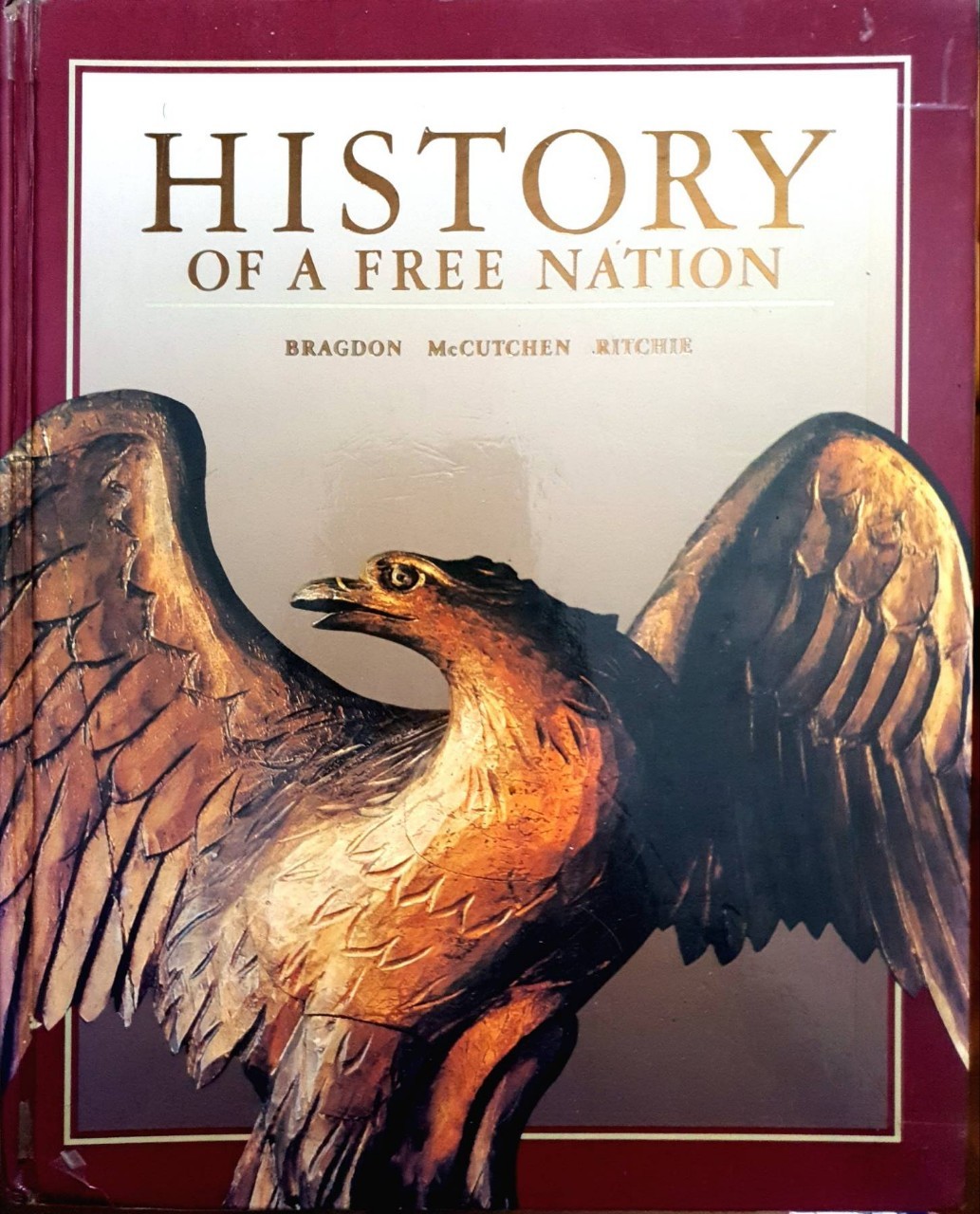
History of A Free Nation (Grade 7 & 8)
History of a Free Nation is a Grade 7 and 8 American history textbook that guides students through the full sweep of United States history, from early world exploration and colonial America through the founding era, westward expansion, the Civil War and Reconstruction, and the rise of industrial society. The text continues into the twentieth century, covering pivotal events and movements such as the Progressive Era, World War I, the Great Depression and New Deal, World War II, the Cold War, the Vietnam Era, and the political and social changes that shaped modern America. With chapters spanning topics like Manifest Destiny, immigration and urban life, imperialism, and the search for new solutions in recent decades, the book provides a comprehensive narrative of American political, social, and economic development suitable for middle school learners.
Chapters & Lessons
Chapter 1: The World in Transition
4 lessonsIn this Grade 7 lesson from History of A Free Nation, students explore the spread of Islam from the Arabian Peninsula across Asia, Africa, and Europe, examining its political, religious, and cultural impact on medieval civilizations. The lesson covers the rise of the Mongol Empire, the Mogul Empire in India, and the trading kingdoms of Africa, while tracing how Muslim scholars preserved Greek and Roman knowledge and introduced advances in medicine, mathematics, and Arabic numerals to Europe. Students also analyze how centuries of trade and the Crusades deepened connections between the Old World civilizations long before European exploration began.
In this Grade 7 history lesson from History of A Free Nation, students examine the economic and technological changes that enabled Europeans to undertake long ocean voyages during the Age of Exploration, including the rise of joint-stock companies and advances in ship design and navigation tools such as the astrolabe, quadrant, and caravel. The lesson traces Portugal's pioneering role in seeking a sea route to Asia, highlighting the motivations of merchants, monarchs, and the Church in sponsoring these ventures. Students also explore how Portuguese explorers, encouraged by Prince Henry's center at Sagres, worked to break the Arab and Venetian monopoly on overland trade routes to Asia.
Chapter 2: Discovery and Exploration
3 lessonsIn this Grade 7 lesson from History of A Free Nation, students learn how Spanish conquistadores such as Hernán Cortés and Francisco Pizarro conquered the Aztec and Inca empires through military force, strategic alliances, and the spread of European diseases. The lesson covers the establishment of Spanish colonial rule across Mexico, Central America, and South America, including the exploitation of native populations and the importation of African slaves. Students also examine life in the Spanish colonies and the lasting impact of Spanish exploration on the indigenous peoples of the Americas.
Chapter 3: Colonial America
5 lessonsGrade 7 students studying Chapter 3 of History of a Free Nation explore the founding of Jamestown in 1607, examining how environmental challenges, disease, starvation, and poor management by the Virginia Company threatened the colony's survival. The lesson covers key figures like Captain John Smith and the role of trade with Native Americans in sustaining the settlers, as well as earlier failed attempts at English colonization such as the Lost Colony of Roanoke. Students also analyze how economic conditions and the search for profit shaped the development of England's Southern Colonies in early America.
In this Grade 7 lesson from History of A Free Nation, students learn how New England was settled by religious dissenters, including the Separatists (Pilgrims) who arrived on the Mayflower in 1620 and established Plymouth Colony, and the Puritans who founded the Massachusetts Bay Colony in 1630. The lesson examines the relationship between church and state in the New England colonies and explains how the Mayflower Compact laid early groundwork for self-government. Students also explore key figures such as William Bradford and John Winthrop as part of Chapter 3: Colonial America.
In this Grade 7 lesson from History of A Free Nation, students explore the founding and development of the Middle Colonies, examining how proprietorships shaped colonial governance in New York, New Jersey, and Pennsylvania. Students learn how the English acquisition of New Netherland led to the creation of New York, the role of elected representative assemblies in attracting settlers, and the factors that influenced each colony's growth. The lesson also covers key events such as the Glorious Revolution's impact on New York and the significance of Pennsylvania's rapid expansion under William Penn.
In this Grade 7 lesson from History of A Free Nation, Chapter 3: Colonial America, students examine the social structure of the thirteen colonies, including colonial social classes, the role of indentured servants, and the demographics of colonial society. The lesson also addresses the enslavement of Africans, the treatment of Native Americans, and the diverse European populations that shaped colonial life. Students gain a nuanced understanding of how economic opportunity, labor systems, and social inequality interacted to form a distinctly American colonial society.
In this Grade 7 lesson from History of A Free Nation, students explore how colonial American society diverged from its British roots by the mid-1700s, with a focus on the development of religious toleration across different regions and denominations. Students examine key factors such as the Great Awakening, the influence of figures like Roger Williams and Jonathan Edwards, and the role of colonial education in shaping democratic values. The lesson also identifies three foundational sources of democratic government and individual rights that emerged during the colonial period.
Chapter 4: The Road to Revolution
4 lessonsIn this Grade 7 lesson from History of A Free Nation, Chapter 4, students explore how Britain's Trade and Navigation Acts — including enumerated commodities, the Molasses Act, and various manufacturing restrictions — shaped the colonial economy and limited free trade. Students learn how Parliament's policy of salutary neglect allowed widespread smuggling and tax evasion, setting the stage for growing colonial resistance. The lesson also examines the economic motives behind British colonial policy and how trade conflicts contributed to the development of a distinct American identity.
In this Grade 7 lesson from History of a Free Nation, students examine the Anglo-French rivalry for control of North America, tracing the causes and stages of the French and Indian War through conflicts including King William's War, Queen Anne's War, and the Seven Years' War. Students learn how competing British and French imperial ambitions, the Albany Plan of Union, and early military engagements in the Ohio Valley set the stage for a decisive shift in North American colonial power.
In this Grade 7 lesson from History of A Free Nation, students examine how Britain tightened control over the colonies after the French and Indian War through measures such as the Proclamation of 1763, writs of assistance, and the Sugar Act of 1764. Students learn how Pontiac's Rebellion influenced British frontier policy and how Grenville's stricter enforcement of customs laws fueled colonial resentment. The lesson also explores how colonists responded to these British actions and why the postwar period marked a turning point in the relationship between Britain and its American colonies.
In this Grade 7 lesson from History of A Free Nation, students examine the escalating tensions between the American colonies and Great Britain from 1770 to 1775, including the roles of the Sons and Daughters of Liberty, the Boston Tea Party, the Intolerable Acts, and the First Continental Congress. Students learn how colonial resistance strategies — such as nonimportation agreements, committees of correspondence, and boycotts — responded to British legislation like the Townshend Acts and the Declaratory Act. The lesson traces how each side's actions widened the breach between colonists and Parliament and pushed the colonies toward the outbreak of war.
Chapter 5: War for Independence
4 lessonsIn this Grade 7 lesson from History of A Free Nation, students examine the arguments for American independence, including how Thomas Paine's pamphlet Common Sense challenged loyalty to the British monarchy and pushed colonists toward separation. Students explore why the Second Continental Congress initially resisted declaring independence and how King George III's response — labeling colonial leaders as traitors and hiring Hessian mercenaries — made compromise impossible. The lesson also introduces the purposes and principles of the Declaration of Independence within the broader context of Chapter 5's War for Independence.
In this Grade 7 lesson from History of A Free Nation, students examine the early military struggles of the Revolutionary War, focusing on Washington's surprise attacks on Hessian forces at Trenton and Princeton in late 1776 and early 1777. Students learn why these victories were strategically critical for the American cause and compare the challenges both sides faced, including desertion, short-term enlistments, and the near-worthless Continental currency. The lesson draws on primary sources such as Thomas Paine's The Crisis to illustrate the broader context of Patriot endurance during the war for independence.
In this Grade 7 lesson from History of A Free Nation, students examine how the American Revolution escalated through key events including General Burgoyne's three-pronged British offensive, the pivotal American victory at the Battle of Saratoga in 1777, and France's subsequent alliance with the Continental Congress. Students also explore the roles of women, African Americans, and Native Americans in the war, and analyze the hardships endured by Washington's troops during the brutal winter encampment at Valley Forge.
In this Grade 7 lesson from History of A Free Nation, students examine the final phase of the American Revolutionary War, including British military strategy in the southern colonies, Benedict Arnold's betrayal at West Point, and the guerrilla tactics of Francis Marion. Students analyze the problems both sides faced in sustaining the war effort and trace the military events — from King's Mountain and Cowpens to French naval victories — that set the stage for the defeat of Lord Cornwallis at Yorktown.
Chapter 6: A More Perfect Union
4 lessonsIn this Grade 7 lesson from History of A Free Nation, students examine how the newly independent states replaced colonial charters with state constitutions, exploring the structure of bicameral legislatures and the limits placed on executive power. The lesson also covers the strengths and weaknesses of the Articles of Confederation as the fledgling nation sought to unify under a central government. Students analyze key social shifts of the era, including early emancipation laws, voting restrictions tied to the franchise, and the disestablishment of the Church of England in the Southern states.
Grade 7 students studying the Articles of Confederation era learn how the new United States struggled with foreign relations, including treaty violations with Britain over Loyalist persecution and northern forts, and territorial and trade disputes with Spain over the Mississippi River and southern boundary claims. The lesson also covers westward expansion and domestic instability under the Confederation Government. This content appears in Chapter 6 of History of a Free Nation, used in Grade 7 and 8 history courses.
In this Grade 7 lesson from History of a Free Nation, students explore the ratification struggle following the drafting of the Constitution, examining the arguments made by Federalists and Anti-Federalists over issues such as states' rights, federal power, and the absence of a Bill of Rights. Students learn how Federalists gained advantages through superior communications, newspaper support, and the publication of The Federalist essays by Hamilton, Madison, and Jay. The lesson is part of Chapter 6: A More Perfect Union and helps students understand how the American people debated and ultimately decided to accept the new framework of government.
Chapter 7: The Federalist Era
4 lessonsIn this Grade 7 lesson from History of A Free Nation, Chapter 7, students examine Alexander Hamilton's financial program for the new United States, including the Tariff of 1789, the excise tax on whiskey, and his proposals to pay off the $54 million national debt through funding and assumption. Students analyze the debate between protective tariffs and revenue tariffs, and explore how Hamilton's Report on the Public Credit shaped federal fiscal policy. The lesson also introduces the tensions between national government power and state interests during the Federalist Era.
In this Grade 7 lesson from History of A Free Nation, students examine how the French Revolution and the outbreak of war between France and Britain in 1793 forced the United States to navigate its first major foreign policy challenges. Students learn how Washington's Proclamation of Neutrality shaped America's stance toward the warring European powers, and explore the significance of key diplomatic agreements including the Jay and Pinckney treaties. The lesson uses the actions of figures like Citizen Genêt and the cabinet debate between Jefferson and Hamilton to illustrate the tensions between American idealism and practical national interest.
In this Grade 7 lesson from History of a Free Nation, students learn how America's first political parties — the Federalists and the Democratic-Republicans — emerged from conflicts within Washington's cabinet over Hamilton's financial program. The lesson traces the origins of partisan politics through the presidential election of 1796, explaining how the Electoral College's structure led to John Adams winning the presidency while his opponent Thomas Jefferson became Vice President. Students also examine John Adams's background in public service and the foreign and domestic challenges he faced as the nation's second president.
Chapter 8: Jefferson and the Republicans
5 lessonsIn this Grade 7 history lesson from History of A Free Nation, students explore the Election of 1800 and the rivalry between the Federalist and Republican parties, examining how Jefferson used newspapers and political organizing to shift public opinion. Students compare the two parties' views on democracy, the economy, and the role of government, and analyze the constitutional crisis caused by the electoral tie between Jefferson and Aaron Burr. The lesson also highlights how the peaceful transfer of power following this election marked a landmark moment in democratic history.
In this Grade 7 lesson from History of A Free Nation, students examine Thomas Jefferson's presidency by comparing his administration to those of Washington and Adams, analyzing how Jefferson balanced Republican ideals with the practical demands of executive leadership. The lesson also covers the landmark Marbury v. Madison case and the establishment of judicial review, explaining how Chief Justice John Marshall claimed the federal courts' power to determine the constitutionality of acts of Congress.
In this Grade 7 lesson from History of A Free Nation, students learn about the Louisiana Purchase of 1803, examining why Jefferson doubted his constitutional authority to acquire foreign territory and how Napoleon's defeat in Haiti led France to sell the entire Louisiana Territory for roughly $15 million. The lesson also covers the Lewis and Clark expedition and the growing tensions between Native Americans and the U.S. government as westward expansion accelerated. Part of Chapter 8 on Jefferson and the Republicans, this section helps students understand the constitutional debates and geopolitical forces that shaped early American expansion.
In this Grade 7 lesson from History of A Free Nation, students examine how the United States struggled to maintain neutrality and freedom of the seas during the early 1800s, including Jefferson's four-year war against the Barbary Coast pirates and the competing trade restrictions imposed by Britain's Orders in Council and Napoleon's Berlin and Milan decrees. Students identify the key challenges to American neutrality and trace the growing pressures that pushed the nation toward war with Britain.
Grade 7 students explore the War of 1812 in this lesson from History of A Free Nation, covering key events such as the failed U.S. invasion of Canada, Commodore Oliver Hazard Perry's victory on Lake Erie, the British burning of Washington, and Andrew Jackson's defense of New Orleans. Students learn how military unpreparedness, state resistance to supplying militia, and shifting European alliances shaped the course of the conflict. The lesson also introduces the origin of the "Star-Spangled Banner" and the role of free Black battalions in the Battle of New Orleans.
Chapter 9: Nationalism and Change
3 lessonsIn this Grade 7 lesson from History of A Free Nation, students explore the Era of Good Feelings and learn how nationalism reshaped American politics and policy after the War of 1812. The lesson covers key concepts including Henry Clay's American System, the protective tariff, and the establishment of the Second Bank of the United States. Students also examine how the Supreme Court expanded federal power and how postwar unity contributed to President Monroe's unopposed reelection in 1820.
In this Grade 7 lesson from History of A Free Nation, students explore how the United States developed its early transportation network through internal improvements such as the National Road, turnpikes, and canals following the War of 1812. Students examine the political debate over federal versus state funding for infrastructure, including the vetoed Bonus Bill and Henry Clay's role in promoting national development. The lesson also analyzes the practical advantages and limitations of road travel during the Era of Good Feelings as the country expanded westward beyond the Appalachians.
In this Grade 7 lesson from History of A Free Nation, students learn how the United States resolved post-War of 1812 disputes with Britain and Spain through key agreements including the Rush-Bagot Agreement of 1817 and the Convention of 1818. The lesson also covers the foreign policy principles behind the Monroe Doctrine and how Secretary of State John Quincy Adams shaped America's diplomatic relations with European powers and Latin America. Students examine how nationalism influenced U.S. foreign affairs and established lasting boundaries and policies in the Western Hemisphere.
Chapter 10: Sectionalism and Growth
3 lessonsIn this Grade 7 history lesson from History of A Free Nation, students explore the Industrial Revolution and its transformative impact on the United States, examining how the shift from hand tools and draft animals to complex machines and steam power reshaped American life and labor. The lesson traces key developments including Samuel Slater's introduction of British textile machinery, the rise of cotton and woolen mills across New England and the Middle Atlantic states, and the growth of industries such as coal, iron, and machinery manufacturing. Students also analyze how industrialization changed the nature of work and set the conditions for early labor organizing efforts in America.
In this Grade 7 lesson from History of A Free Nation, Chapter 10, students examine how Eli Whitney's 1793 cotton gin transformed southern agriculture by making slave labor highly profitable and dramatically expanding cotton production. Students explore why cotton became the dominant crop and leading national export, reinforcing a rigid class structure and widening acceptance of slavery throughout the South. The lesson also introduces the economic and social forces that shaped sectionalism during the early 19th century.
In this Grade 7 lesson from History of A Free Nation, students examine the four major areas of sectional conflict in early America — public land policy, protective tariffs, internal improvements, and the expansion of slavery into new territories. The lesson explains how regional differences between the Northeast, South, and West shaped each section's opposing interests and why compromise became essential to preserving the Union. Students also learn how the Missouri Compromise temporarily maintained the balance between slave states and free states and how John Quincy Adams won the contested 1824 presidential election.
Chapter 11: Age of Jackson
5 lessonsIn this Grade 7 lesson from History of A Free Nation, students examine the election of 1828, analyzing the mudslinging campaign tactics used by the National Republicans and Democratic Republicans and how Andrew Jackson's appeal to the "common man" led to his decisive electoral victory. Students also learn how the expansion of voting rights in the early 1800s — including the elimination of property ownership as a voting qualification — drove a dramatic surge in voter participation and reshaped American democracy. The lesson connects these developments to the broader rise of Jacksonian democracy and its impact on the political landscape of the United States.
In this Grade 7 lesson from History of A Free Nation, Chapter 11, students explore the key features of Jacksonian Democracy, including the rise of the spoils system, rotation in office, and the expansion of political rights for the common man. Students examine how Jackson's presidency shifted democratic ideals by making government more responsive to ordinary voters through elected positions, shortened terms of office, and stronger national party organization. The lesson also addresses the limitations of this era's democracy regarding Native Americans, African Americans, and women.
In this Grade 7 lesson from History of a Free Nation, students examine the political controversies of Andrew Jackson's presidency, including the Maysville Road veto, federal land policy disputes, and the growing sectional divide over tariffs. Students learn how the nullification crisis emerged as Southern states, led by Vice President Calhoun, challenged the constitutionality of protective tariffs, while Daniel Webster defended federal authority and the permanence of the Union. The lesson develops students' ability to analyze how competing regional interests strained the federal system during the Jacksonian era.
In this Grade 7 lesson from History of A Free Nation, students examine the political and economic conflict over the Second Bank of the United States, including the main arguments from farmers, laborers, and business interests for and against the B.U.S. Students learn how Nicholas Biddle's leadership shaped the Bank's reputation, why Jackson distrusted paper currency and banking monopolies, and how Henry Clay's Recharter Bill of 1832 turned the Bank into a defining issue of the presidential election. The lesson covers key concepts such as hard money, monopoly charters, and Jackson's veto strategy as tools to understand the era's deep sectional and class divisions.
In this Grade 7 lesson from History of a Free Nation, students learn how opposition to Andrew Jackson led to the formation of the Whig Party, including the roles of Henry Clay and Daniel Webster in challenging executive power. The lesson covers the causes of the Panic of 1837, Van Buren's Independent Treasury System, and the Whig strategy in the "Log Cabin" campaign of 1840. Students also examine why the Whig Party ultimately collapsed over the issue of slavery in the 1850s.
Chapter 12: The Spirit of Reform
3 lessonsIn this Grade 7 lesson from History of A Free Nation, students explore the growth of public education in the early 1800s, examining how expanding voting rights and rising immigration drove demand for tax-supported schools. The lesson covers key figures such as Horace Mann, who established normal schools and a Massachusetts state board of education, and addresses the obstacles reformers faced, including resistance to public taxation, racial barriers to schooling, and debates over curriculum. Students also analyze the broader connection between democratic ideals from the Declaration of Independence and the push for universal education during the Jacksonian era.
Grade 7 students in History of A Free Nation examine the major reform movements of the 1830s and 1840s, including prison reform, the treatment of the mentally ill, and the women's rights movement, as part of Chapter 12: The Spirit of Reform. The lesson covers key figures such as Dorothea Dix and her advocacy for humane treatment of the mentally ill, as well as the status of women as second-class citizens under English common law and the early struggle for suffrage. Students learn to identify the achievements of reform movements and analyze how reformers challenged social and political inequalities in Jacksonian America.
In this Grade 7 lesson from History of A Free Nation, Chapter 12, students explore how the United States developed a distinct national culture in the early 1800s by examining the works of prominent American writers such as Washington Irving, James Fenimore Cooper, Nathaniel Hawthorne, Herman Melville, and Henry David Thoreau. Students also identify the scientific contributions of naturalists at the New Harmony community and explain the goals of nineteenth-century religious and temperance movements. The lesson helps students understand how Americans used art, literature, and reform movements to assert cultural independence from Europe.
Chapter 13: Manifest Destiny
4 lessonsIn this Grade 7 lesson from History of a Free Nation, students examine the overland migrations to Oregon and Utah and the events that led Texas to seek independence from Mexico and eventually join the United States. The lesson covers key topics including the joint occupation of the Oregon Territory, the fur trade and the role of mountain men in opening westward routes, and the wave of American settlement in the 1820s through 1840s that fueled Manifest Destiny. Part of Chapter 13, it builds students' understanding of how expansion and annexation shaped the boundaries of the early United States.
In this Grade 7 lesson from History of A Free Nation, students examine the causes and outbreak of the Mexican-American War, including President Polk's territorial ambitions, the failed Slidell diplomatic mission, and the disputed Texas boundary between the Nueces River and the Rio Grande. Students learn to contrast the United States' short-term and long-range goals in the conflict and analyze how Polk used the Rio Grande skirmish to justify a congressional declaration of war in May 1846. The lesson also covers domestic opposition to the war from Whigs and northerners, including Abraham Lincoln's challenge to Polk's justifications.
In this Grade 7 lesson from History of A Free Nation, students explore how the spirit of Manifest Destiny extended beyond North America as the United States pursued territorial and commercial interests in Cuba, Central America, China, and Japan during the mid-1800s. Students examine key events including the Ostend Manifesto, the Clayton-Bulwer Treaty, and Commodore Perry's mission to Japan, analyzing the economic and political motivations behind American expansionism. The lesson connects continental expansion after the Mexican War and Oregon acquisition to the emergence of broader U.S. global ambitions in the mid-nineteenth century.
Chapter 14: Compromise and Conflict
4 lessonsIn this Grade 7 lesson from History of A Free Nation, students examine the institution of slavery in the antebellum South, including the economic and social arguments used to defend it, the legal restrictions imposed on enslaved and free Black people, and the provisions of the Fugitive Slave Law under the Compromise of 1850. The lesson also covers key figures and movements in the abolitionist cause, such as Harriet Tubman and the Underground Railroad, as well as the cultural impact of Harriet Beecher Stowe's Uncle Tom's Cabin. Part of Chapter 14: Compromise and Conflict, this lesson helps students understand the deepening sectional tensions over slavery in the years leading up to the Civil War.
Chapter 15: The Civil War
4 lessonsIn this Grade 7 lesson from History of A Free Nation, students examine the major battles of the Civil War, including the eastern and western theaters of warfare, the First and Second Battles of Bull Run, and the Battle of Antietam. Students analyze the military strategies of key commanders such as Robert E. Lee, Stonewall Jackson, and George McClellan, and explore the significance of Antietam as the turning point that led Lincoln to issue the Emancipation Proclamation. The lesson helps students understand how battlefield outcomes shaped both the military course of the war and its broader political consequences.
In this Grade 7 lesson from History of A Free Nation, students explore the behind-the-lines experience of the Civil War, examining how both the Union and Confederacy mobilized financial, agricultural, and industrial resources while expanding wartime government power. Students learn about key civil liberties issues such as the suspension of habeas corpus, the suppression of Copperhead opposition, and landmark cases like Ex parte Vallandigham and Ex parte Milligan. The lesson also covers the vital roles played by women, Black soldiers, and Native Americans in supporting the war effort on both sides.
In this Grade 7 lesson from History of A Free Nation, Chapter 15, students examine how Ulysses S. Grant's appointment as commander of all Union forces transformed Union military strategy through total war tactics, including the Overland Campaign against Robert E. Lee in Virginia and Sherman's March through Georgia and the Carolinas. Students also analyze the key issues surrounding the presidential election of 1864 and how the war's progress shaped the political climate in the North.
Chapter 16: Reconstruction
3 lessonsGrade 7 students studying Chapter 16 of History of A Free Nation examine the economic and social collapse of the post-Civil War South, including the destruction of the plantation system and the rise of tenant farming and sharecropping. The lesson explains how newly freed Black Americans and poor whites became bound to the land through debt and crop-share arrangements that often kept them in conditions little better than slavery. Students also explore how Confederate defeat dismantled the planter aristocracy and forced the South to rebuild its labor system from the ground up.
Grade 7 students studying Chapter 16 of History of A Free Nation examine the competing Reconstruction plans following the Civil War, comparing Lincoln's lenient Ten Percent Plan and the Wade-Davis Bill proposed by Radical Republicans with Andrew Johnson's presidential Reconstruction program. The lesson explains how Johnson's leniency allowed former Confederate officials to return to power and how black codes threatened the rights of freed slaves, fueling the conflict between Congress and the executive branch over Reconstruction policy.
In this Grade 7 lesson from History of A Free Nation, students examine how Southern white Democrats dismantled Radical Reconstruction through organized resistance, including Ku Klux Klan violence and the suppression of Black voters, and how the disputed 1876 presidential election led to the Compromise of 1877. Students explore key events such as the rise of "Redeemer" governments, the weakening of federal oversight under Grant, and the electoral commission that awarded the presidency to Rutherford B. Hayes. The lesson helps students understand the political and racial consequences that ended Reconstruction and restored former Confederates to power across the South.
Chapter 17: Opening the Trans-Mississippi West
3 lessonsIn this Grade 7 lesson from History of a Free Nation, students explore the Plains Indians Era, learning how nomadic peoples such as the Sioux, Comanche, and Blackfeet organized their way of life around buffalo hunting and the adoption of the horse in the 1600s. The lesson examines how the expansion of white settlement and railroad construction into the Great Plains disrupted this way of life and ultimately forced surviving Plains Indians onto reservations. Part of Chapter 17 on Opening the Trans-Mississippi West, it covers key concepts including nomadic culture, the role of the buffalo, and the causes behind the end of the Plains Indians' traditional way of life.
In this Grade 7 lesson from History of a Free Nation, students explore how farmers settled the Great Plains in the late 1800s by examining the Homestead Act of 1862, new agricultural technologies like barbed wire and the cast-iron windmill, and the role of railroad expansion and European immigration. Students learn why the Homestead Act largely failed due to fraud and speculator abuse, and how challenges such as scarce water and lack of timber were overcome through industrialization. The lesson also covers the myths and promotional campaigns, including the slogan "Rain follows the plow," used to encourage westward settlement.
Chapter 18: The Rise of Industrial America
3 lessonsIn this Grade 7 lesson from History of A Free Nation, students explore the key factors that fueled American industrialization after the Civil War, including the expansion of natural resources such as coal, iron ore, and petroleum, the role of immigration in building the labor supply, and government policies like laissez-faire economics, protective tariffs, and railroad land grants. Students also examine how the railroad network accelerated industrial growth and helped the United States surpass Great Britain as the world's leading industrial power by the 1880s. The lesson is part of Chapter 18: The Rise of Industrial America.
In this Grade 7 lesson from History of a Free Nation, Chapter 18, students learn how corporations and limited liability enabled the rise of big business in late 19th-century America. The lesson examines how economies of scale, Frederick W. Taylor's scientific management methods, and vertical integration allowed companies like Swift, Armour, and Standard Oil to dominate national markets. Students also explore how monopolistic practices such as volume discounts and predatory pricing gave large firms a competitive edge over smaller rivals.
In this Grade 7 lesson from History of A Free Nation, students examine how John D. Rockefeller and Andrew Carnegie built dominant empires in the oil and steel industries through strategies like horizontal consolidation, monopolies, and freight rebates. The lesson introduces key concepts including the Standard Oil Trust, social Darwinism, and the Gospel of Wealth. Students compare the business methods of both industrialists and explore how their rise from poverty to extraordinary wealth shaped the era of big business in late-nineteenth-century America.
Chapter 19: Labor, Immigrants, and Urban Life
4 lessonsIn this Grade 7 lesson from History of A Free Nation, students examine the harsh realities faced by industrial workers in the late 1800s, including low wages, 10-to-14-hour workdays, dangerous factory conditions, child labor, and the rise of company towns and scrip payment systems. The lesson also explores how the shift from skilled to unskilled labor affected workers as machines replaced traditional crafts, and how economic cycles of prosperity and depression left workers vulnerable to layoffs and pay cuts. Part of Chapter 19: Labor, Immigrants, and Urban Life, this lesson builds foundational understanding of the labor movement and the obstacles early unions faced during America's industrial age.
In this Grade 7 lesson from History of A Free Nation, students examine the rapid urbanization of American cities between 1860 and 1900, identifying the industrial factors — including factories, railroads, and mining centers — that drove city growth. Students also analyze the serious problems that accompanied urban expansion, such as tenement overcrowding, inadequate sanitation, epidemic disease, and the lack of city planning and basic services. The lesson draws on cities like Chicago, New York, Pittsburgh, and Birmingham as concrete examples of industrialization reshaping American life in the late 1800s.
Chapter 20: The Gilded Age
3 lessonsIn this Grade 7 lesson from History of a Free Nation, students examine the major causes of political corruption during the Gilded Age, including the rise of political machines, the practice of graft and kickbacks, and the alliance between business and city government. Using the Tweed Ring and Tammany Hall as key examples, students identify how corruption operated at local, state, and national levels in the post-Civil War era. The lesson connects high voter participation rates to a system where political loyalty was exchanged for jobs, services, and basic survival needs.
Grade 7 students studying the Gilded Age in History of A Free Nation examine the push for good government reform during the 1870s and 1880s, focusing on key developments such as the end of patronage under President Hayes, the Stalwarts' opposition to civil service reform, and the passage of the Pendleton Act in 1883. The lesson traces how President Garfield's assassination by a frustrated patronage seeker galvanized public support for reform and led to a competitive examination system for federal jobs administered by a bipartisan Civil Service Commission. Students also learn to identify the tariff controversy and the broader shift away from the spoils system that characterized the Grant administration's corruption.
In this Grade 7 lesson from History of A Free Nation, students explore the cultural transformations of the Gilded Age, focusing on reforms in public schooling, the expansion of higher education, and the rise of coeducation at universities. Students examine specific developments such as the Morrill Act of 1862, the introduction of the elective system at Harvard, the founding of land-grant colleges, and the growth of women's colleges like Vassar and Smith. The lesson also covers the spread of leisure and adult learning through movements like the Chautauqua Institute.
Chapter 21: Politics, Protest, and Populism
3 lessonsIn this Grade 7 lesson from History of A Free Nation, students examine the agrarian unrest of the late 1800s, including the economic hardships farmers faced from falling crop prices, overproduction, and railroad abuses such as stock watering and monopolistic rate-setting. Students analyze the formation of the Grange as a response to farmers' declining political and economic power, and explore how the Interstate Commerce Act attempted to address railroad corruption. The lesson draws on primary sources and literary accounts to help students understand how industrialization reshaped rural life in post-Civil War America.
In this Grade 7 lesson from History of A Free Nation, students explore the rise of the Populist movement and the economic forces that drove it, including the concepts of inflation, deflation, the gold standard, and the debate over greenbacks and free silver. Students examine why farmers in the South and West organized through Farmers' Alliances and ultimately formed the Populist Party to fight the financial policies they believed favored banks, railroads, and industrialists. The lesson also covers the election of 1896 and the eventual decline of Populism as a national political force.
Chapter 22: Imperialism
5 lessonsIn this Grade 7 lesson from History of A Free Nation, students explore how the United States shifted away from isolationism in the late 1800s and began pursuing imperialism, driven by the Industrial Revolution's demand for new markets and raw materials. The lesson examines key concepts including the Monroe Doctrine, manifest destiny, and specific events such as the French intervention in Mexico and the U.S. purchase of Alaska under Secretary of State William Seward. Part of Chapter 22 on Imperialism, this lesson helps students understand the political and economic forces that pushed America toward building a colonial empire beyond the North American continent.
In this Grade 7 lesson from History of A Free Nation, students examine the causes of the Spanish-American War, including Spain's reconcentration camps in Cuba, the sinking of the USS Maine, and the role of yellow journalism in shaping public opinion. Students also explore the political tensions between neutrality and intervention, tracing the chain of events from the Cuban independence movement to Congress's declaration of war in April 1898. The lesson is part of Chapter 22 on Imperialism and builds understanding of how humanitarian concerns and expansionist ambitions both influenced American foreign policy.
In this Grade 7 lesson from History of A Free Nation, students explore how the United States emerged as a world power following the Spanish-American War, examining the annexation of Hawaii and the heated debate over acquiring the Philippine Islands. The lesson covers key concepts including social Darwinism, imperialism, and the constitutional tensions between colonialism and the principles of the Declaration of Independence. Students also analyze the Filipino uprising against American rule and the difficult challenges of governing a diverse colonial territory of 7,100 islands and 87 languages.
In this Grade 7 lesson from History of A Free Nation, Chapter 22, students examine the politics of American imperialism following the Spanish-American War of 1898, focusing on the Open Door policy in China and its goals of securing equal trading rights among foreign powers. Students learn how Secretary of State John Hay's diplomatic notes shaped U.S. involvement in East Asia, and how the Boxer Rebellion reflected Chinese resistance to foreign spheres of influence. The lesson also traces President McKinley's shift away from isolationism and the national debate over American expansionism in the 1900 presidential election.
In this Grade 7 lesson from History of A Free Nation, students examine Theodore Roosevelt's foreign policy approach, including the origins and application of "Big Stick" diplomacy in the Caribbean. The lesson covers Roosevelt's controversial acquisition of the Panama Canal Zone in 1903, his expansion of the Monroe Doctrine, and America's role in the Russo-Japanese War. Students learn how Roosevelt used executive power and strategic maneuvering to establish the United States as a dominant global force during the early twentieth century.
Chapter 23: The Progressive Era
3 lessonsIn this Grade 7 lesson from History of A Free Nation, students learn how Progressive Era reformers strengthened democracy through specific mechanisms including the direct primary, initiative, referendum, and recall, as well as commission and city-manager plans for local government. The lesson covers key figures like Robert La Follette and reform mayors who challenged corrupt political machines at both city and state levels. Students also examine how early progressive reforms expanded to protect workers and set the stage for broader changes in consumer rights, education, and women's suffrage.
In this Grade 7 lesson from History of A Free Nation, students examine the limits of Progressive Era reform, exploring how racial minorities, immigrants, and unskilled workers were largely excluded from the movement's benefits. The lesson covers key topics including the Supreme Court's resistance to expanding federal power, the literacy test laws targeting "New Immigration" from southern and eastern Europe, and the uneven wage gains that left unskilled laborers worse off. Students also analyze shifting black leadership and progressive attitudes toward race and nationalism during the early twentieth century.
Chapter 24: White House Reformers
4 lessonsIn this Grade 7 lesson from History of A Free Nation, students examine Theodore Roosevelt's progressive domestic policies, including his role as a "trust buster" who used the Sherman Act to dissolve monopolies like the Northern Securities Company. Students also explore the 1902 coal strike, Roosevelt's push for business regulation through the Department of Commerce and Labor and the Expedition Act, and his broader legacy as a reformer who championed a "square deal" for all Americans.
Grade 7 students studying Chapter 24 of History of a Free Nation examine the Taft presidency, focusing on the political and public fallout from the Payne-Aldrich Tariff and the Ballinger-Pinchot conservation controversy. Students learn how Taft's decision to sign a high-tariff bill and dismiss conservationist Gifford Pinchot damaged his popularity and drove a wedge between him and former President Theodore Roosevelt. The lesson also explores how these conflicts contributed to a growing split within the Republican Party between Old Guard conservatives and progressive Insurgents.
Grade 7 students in History of A Free Nation learn how a split in the Republican Party between Theodore Roosevelt and incumbent President William Howard Taft led to the formation of the Progressive Party in 1912. The lesson covers Roosevelt's New Nationalism platform, the contested Republican convention, and how the three-way race among Roosevelt, Taft, and Democrat Woodrow Wilson ultimately resulted in Wilson's election. Students also examine the Progressive Party's reform platform, including demands for direct democracy, woman suffrage, child labor prohibition, and an eight-hour workday.
In this Grade 7 lesson from History of A Free Nation, Chapter 24, students learn how President Woodrow Wilson used his congressional influence to advance a progressive domestic agenda, including the Underwood Tariff Act and the introduction of a federal income tax under the Sixteenth Amendment. Students examine Wilson's strategies for overcoming political obstacles, such as appealing directly to the public against lobbyists and leveraging Democratic party loyalty to pass landmark tariff reform. The lesson explains how lowering import duties and establishing income tax revenue reshaped the federal government's economic role during the Progressive Era.
Chapter 25: World War I
4 lessonsIn this Grade 7 lesson from History of A Free Nation, students examine Wilson's Moral Diplomacy and its application to U.S. foreign policy in Mexico, including the tensions surrounding General Huerta's seizure of power, the Veracruz intervention, and the Pershing expedition against Pancho Villa. Students also explore American interventionism in the Caribbean and identify how European nationalism and imperialism set the stage for World War I. The lesson connects presidential decision-making to broader consequences in international relations during the early twentieth century.
In this Grade 7 lesson from History of A Free Nation, students examine the key events that drew the United States into World War I, including Germany's resumption of unrestricted submarine warfare, the Zimmermann Note, and Wilson's war message to Congress calling for a world "safe for democracy." Students analyze how diplomatic relations broke down between the U.S. and Germany from 1916 to April 1917, culminating in Congress's declaration of war, and explore the early challenges of raising an Allied army amid Russian withdrawal and mounting U-boat losses.
In this Grade 7 lesson from History of A Free Nation, students explore how the United States mobilized its economy during World War I through federal agencies like the War Industries Board, the Fuel Administration, and the War Labor Board. Students examine how the war was financed, how the government shaped public opinion, and how wartime mobilization created new opportunities and challenges for women, African Americans, and labor unions. The lesson also introduces Wilson's Fourteen Points as part of America's broader war aims.
In this Grade 7 history lesson from History of A Free Nation, students examine the outcomes of the Versailles Peace Conference, including the territorial losses and war reparations imposed on Germany and the creation of the League of Nations. The lesson explains how President Wilson's political missteps, Republican opposition in the Senate, and Allied demands undermined his Fourteen Points peace plan and ultimately led to the Senate's rejection of the Treaty of Versailles. Students also explore the domestic tensions that surfaced in the United States after World War I ended.
Chapter 26: The Decade of Normalcy
3 lessonsIn this Grade 7 lesson from History of A Free Nation, students explore the Harding administration of the early 1920s, examining how Warren G. Harding's "return to normalcy" platform reshaped U.S. domestic and foreign policy after World War I. The lesson covers the 1920 presidential election, the rejection of the League of Nations, and the shift from Wilsonian internationalism toward an "America First" outlook. Students also analyze key events including the Washington Conference, the National Origins Act, and the scandals that marked Harding's presidency.
In this Grade 7 lesson from History of a Free Nation, students explore the Coolidge Era of the 1920s, examining President Coolidge's laissez-faire governing philosophy and its connection to the period's booming economy. Students learn how Henry Ford's assembly line and standardized parts transformed automobile manufacturing, making cars accessible to ordinary Americans, while also analyzing the political divisions of the 1924 Democratic convention and the rise of the Ku Klux Klan as a political force. The lesson also covers the Kellogg-Briand Pact and the challenges faced by farmers during this decade of prosperity.
Chapter 27: The Depression Begins
3 lessonsIn this Grade 7 lesson from History of A Free Nation, students examine the causes of the Great Depression, including the 1929 stock market crash and the economic chain reaction that followed. The lesson also covers Herbert Hoover's philosophy of limited government intervention in business and how his views shaped his economic policy as president. Students gain context through the 1928 presidential election, exploring how issues like Prohibition, religion, and prosperity influenced the outcome.
In this Grade 7 lesson from History of A Free Nation, students examine how the Great Depression worsened between 1929 and 1933, comparing the hardships faced by industrial workers and farmers as unemployment surpassed 25 percent, wages collapsed, and breadlines stretched across American cities. Students explore key economic indicators such as the drop in national income from $81 billion to $41 billion, the wave of bank failures, and the agricultural crisis that led farmers to declare "farmers' holidays" and blockade highways in protest. The lesson also analyzes the national mood leading into the election of 1932 as despair and loss of confidence replaced the optimism of the 1920s.
Chapter 28: The New Deal
4 lessonsIn this Grade 7 history lesson from History of A Free Nation, students examine how Franklin D. Roosevelt's leadership traits and political experience shaped his response to the Great Depression. The lesson covers Roosevelt's use of fireside chats and press conferences to build public support, his background in Progressive Era politics, and how his battle with polio influenced his empathy and resilience as a leader. Students also explore how Roosevelt's inaugural address and early New Deal philosophy marked a sharp departure from the Hoover administration's approach to the economic crisis.
In this Grade 7 lesson from History of A Free Nation, students examine the key programs of Franklin Roosevelt's New Deal, including the Glass-Steagall Act, the FDIC, the SEC, FERA, PWA, and CWA, and how each aimed to address financial instability and unemployment during the Great Depression. Students analyze how Roosevelt's approach differed from Hoover's, comparing the effectiveness of measures like pump priming, the dole, and public works employment for rural and urban Americans. The lesson is part of Chapter 28 and builds understanding of how federal legislation shaped economic recovery in the 1930s.
In this Grade 7 lesson from History of a Free Nation, students examine the Second New Deal, learning how critics like Father Coughlin, Huey Long, and Dr. Francis Townsend challenged Roosevelt with rival proposals including the Share-Our-Wealth plan and Townsend's old-age pension scheme. Students trace how FDR responded by shifting toward large-scale work relief programs such as the Works Progress Administration and building a new Democratic coalition of labor unions, farmers, and Black voters. The lesson also covers how Roosevelt's efforts to achieve permanent reform through Social Security and expanded government spending ultimately met continued political opposition.
In this Grade 7 lesson from History of A Free Nation, students examine the broad societal effects of the New Deal on American life during the Great Depression, including changes to family roles, child labor laws, and women's employment. Students also analyze how New Deal programs like the WPA and NYA affected minorities, including the limited gains and persistent discrimination faced by African Americans. The lesson draws on the Lynds' Middletown studies and figures such as Mary McLeod Bethune to help students evaluate the New Deal's lasting impact on American society.
Chapter 29: World War II
4 lessonsIn this Grade 7 lesson from History of A Free Nation, Chapter 29, students examine how the Great Depression shaped American foreign policy in the 1930s, including Roosevelt's Good Neighbor Policy, the Reciprocal Trade Agreements Act of 1934, and U.S. recognition of the Soviet Union. Students also explore the roots of Japanese militarism and aggression in Asia as Europe and Asia moved toward another world war.
In this Grade 7 lesson from History of A Free Nation, students examine the United States' entry into World War II following the Japanese attack on Pearl Harbor on December 7, 1941, and trace the early course of fighting across both the Pacific and European theaters. Students analyze key strategic decisions such as the "Europe First" policy, the Axis powers' advances in North Africa and the Soviet Union, and the critical Battle of Stalingrad. The lesson also introduces students to Allied cooperation through the Atlantic Charter and the agreements reached at the Yalta Conference.
In this Grade 7 lesson from History of A Free Nation, students examine how the United States mobilized its economy for World War II, covering the War Production Board's authority over industrial conversion, rationing programs, and wartime inflation controls. Students also explore the social impact of the war on women, Black Americans, and Japanese Americans on the home front. The lesson connects wartime economic policy — including war bonds, income tax expansion, and the Office of Price Administration — to the broader effort to defeat the Axis powers.
Chapter 30: The Cold War
4 lessonsIn this Grade 7 lesson from History of A Free Nation, students explore the origins of the Cold War and Truman's policy of containment, examining how Soviet expansion into Eastern Europe led to the creation of satellite nations and the ideological divide between Western democracy and Soviet-style communism. Students learn how post-World War II tensions between the United States and the Soviet Union unraveled the Allied alliance, culminating in Winston Churchill's famous "iron curtain" speech describing the division of Europe.
In this Grade 7 lesson from History of A Free Nation, students examine how the United States implemented the policy of containment in postwar Europe through the Truman Doctrine and the Marshall Plan. Students learn how President Truman's 1947 appeal to Congress led to military and economic aid for Greece and Turkey, and how Secretary of State George Marshall's recovery plan provided over $13 billion to rebuild war-torn Western Europe. The lesson also explores how these initiatives marked a decisive shift away from American isolationism and established the United States as a global power during the early Cold War.
In this Grade 7 lesson from History of A Free Nation, students examine how the Cold War shaped Asia after World War II, including the U.S. occupation of Japan under General Douglas MacArthur, the Potsdam Declaration, and the Communist triumph in China under Mao Zedong. Students learn how Japan was demilitarized, democratized, and rebuilt under MacArthur's leadership, while also exploring why U.S. policy succeeded in the Philippines and Japan but failed in China. The lesson also introduces the concept of limited war as it applies to the United Nations' involvement in Korea.
In this Grade 7 lesson from History of A Free Nation, students examine postwar economic changes in Cold War America, including postwar inflation, shifts in the labor force, and the economic gains made by African Americans and women between 1940 and 1950. Students also evaluate the Truman presidency and its response to domestic concerns such as anti-communist fears and civil rights. The lesson draws on Chapter 30 to help students understand how wartime economic shifts shaped American society in the late 1940s and early 1950s.
Chapter 31: Search for Stability
5 lessonsIn this Grade 7 lesson from History of A Free Nation, students examine Dwight D. Eisenhower's rise to the presidency in the 1952 election, exploring how Cold War anxieties, the Korean War, and concerns about communist infiltration shaped the political climate. Students analyze Eisenhower's cabinet-centered leadership style, including his use of a chief of staff and formal advisory structure, as well as key campaign events such as Nixon's "Checkers speech." The lesson also covers the political decline of Senator Joseph McCarthy and the broader Republican challenge to two decades of Democratic leadership.
In this Grade 7 history lesson from History of A Free Nation, students examine President Eisenhower's "middle of the road" economic policies, exploring how his administration balanced conservative goals like budget cuts and limited government with the preservation and expansion of New Deal programs such as Social Security and unemployment compensation. Students also analyze the growth of big business, the AFL-CIO merger, and the challenges facing organized labor during the 1950s prosperity era.
In this Grade 7 lesson from History of A Free Nation, students explore how postwar economic growth transformed American life in the 1950s, examining John Kenneth Galbraith's concept of an "economy of abundance" and how it contrasted with traditional "economies of scarcity." Students analyze rising income distribution, suburban expansion, and the role of automation and early computers in fueling prosperity. The lesson also addresses advances in medical technology and the social pressures of conformity that accompanied 1950s affluence.
In this Grade 7 lesson from History of A Free Nation, students examine the Eisenhower-Dulles foreign policy of the 1950s, including Secretary of State John Foster Dulles's doctrine of "massive retaliation" and his push for the "liberation" of Soviet-dominated nations over Truman's containment strategy. Students also explore how Eisenhower applied the domino theory to Southeast Asia, the outcome of the Korean War armistice, and the division of Vietnam at the 17th parallel following the French defeat at Dien Bien Phu. The lesson is part of Chapter 31: Search for Stability and covers how the Eisenhower administration used diplomacy, military power, and CIA covert activities to counter communist expansion.
In this Grade 7 lesson from History of A Free Nation, students examine how the Cold War spread globally during the Eisenhower era, focusing on the formation of alliances like NATO, SEATO, CENTO, and the OAS as strategies to contain communism. Students also explore the concept of the military-industrial complex, the Soviet suppression of the Hungarian uprising, and why U.S.-Latin American relations deteriorated in the 1950s, including Fidel Castro's revolution in Cuba.
Chapter 33: The Vietnam Era
4 lessonsIn this Grade 7 lesson from History of A Free Nation, students examine Lyndon Johnson's Great Society program, including the landmark Civil Rights Act of 1964, his policy of governing through consensus, and his War on Poverty. The lesson covers Johnson's landslide 1964 election victory over Barry Goldwater and explores how domestic legislation from this era sought to address poverty, discrimination, and unemployment in the United States.
Grade 7 students studying Chapter 33 of History of A Free Nation explore how the Gulf of Tonkin incident led to the escalation of U.S. involvement in Vietnam, including President Johnson's use of the Gulf of Tonkin Resolution to expand American military operations. The lesson examines the domino theory, Vietcong guerrilla tactics, and the growing domestic and international opposition to the war. Students also analyze the key decisions and deceptions that transformed a limited conflict into a major war between American and communist forces.
In this Grade 7 lesson from History of a Free Nation, students examine the major disasters of 1968 that deepened the crisis of the Vietnam era, including the North Korean seizure of the USS Pueblo and the Tet Offensive. Students learn why the Tet Offensive became the decisive turning point in the Vietnam War, analyzing how a military defeat for communist forces translated into a political victory that shattered American public confidence. The lesson also explores the growing divide between "hawks" and "doves" and President Johnson's loss of public support following Walter Cronkite's landmark broadcast.
Chapter 34: An Imperial Presidency
4 lessonsGrade 7 students in History of A Free Nation examine Richard Nixon's domestic presidency, focusing on his southern strategy, new federalism, and attempts to reshape the Supreme Court by appointing conservative justices. The lesson also covers Nixon's efforts to address inflation and high unemployment in the early 1970s, and his controversial decision to delay school desegregation despite the Supreme Court's ruling in Green v. County School Board. Students explore how Nixon's domestic policies reflected both his political transformation and the tensions between federal and state authority.
In this Grade 7 lesson from History of A Free Nation, students examine Nixon's foreign policy strategy of détente — the relaxation of tensions with communist nations — and how it shaped his landmark diplomatic openings with China and the Soviet Union. Students learn how Nixon and Kissinger used secret missions, summit diplomacy, and the SALT I arms-limitation agreement to redefine America's Cold War relationships. The lesson also introduces key events such as Nixon's 1972 Beijing visit and the Moscow summit, illustrating how surprise and secrecy defined his approach to foreign policy.
In this Grade 7 lesson from History of A Free Nation, students examine the antiwar movement sparked by the Vietnam War and the rebirth of the women's rights movement during the 1960s and 1970s. Students analyze key events such as the Kent State shootings, the founding of the National Organization for Women (NOW) by Betty Friedan, and the wage and representation gaps that defined women's status as a disadvantaged minority. The lesson also explains why the Equal Rights Amendment failed to achieve ratification despite growing demands for gender equality.
In this Grade 7 lesson from History of a Free Nation, students learn about the Watergate scandal, including Nixon's abuse of executive power, the role of CREEP, and the constitutional process that led to his resignation. The lesson examines how Congress and the Supreme Court reasserted their constitutional powers in response to the crisis. Students also explore how Gerald Ford's presidency and the nation's bicentennial marked a period of rebuilding public trust in American government.
Chapter 35: A Search for New Solutions
3 lessonsGrade 7 students studying Chapter 35 of History of A Free Nation examine the "Crisis of Confidence" that gripped the United States in the mid-1970s, exploring how the aftermath of the Vietnam War, Watergate scandal, and economic pressures including inflation, unemployment, and oil dependence eroded public trust in government. The lesson covers the 1976 presidential election between Gerald Ford and Jimmy Carter, analyzing how Carter's outsider status and campaign promises of government reform helped him secure a narrow victory. Students also begin to explore Carter's domestic energy policy and his approach to restoring national confidence.
In this Grade 7 history lesson from History of A Free Nation, students examine the conservative revolution of 1980, including Ronald Reagan's presidential victory over Jimmy Carter and the coalition of voters that shifted American politics rightward. The lesson covers Reagan's supply-side economic recovery plan, the Republican platform's call for tax cuts and reduced government spending, and how the Iran hostage crisis and widespread dissatisfaction with Democratic leadership shaped the election outcome. Students also compare Carter's and Reagan's foreign policy approaches and explore the role of televangelism and religious conservative movements in the political realignment of the era.
Chapter 36: Toward a New Century
4 lessonsIn this Grade 7 history lesson from History of A Free Nation, students examine the collapse of the Soviet Union and the end of the Cold War, including Gorbachev's reform policies, the fall of communist governments across Eastern Europe, and the tearing down of the Berlin Wall. Students also learn how Boris Yeltsin's resistance helped defeat the 1991 coup attempt and how the Soviet republics moved toward independence. The lesson draws on Chapter 36 to help students understand the causes and key events that reshaped the global political order in the late twentieth century.
Grade 7 students studying Chapter 36 of History of a Free Nation examine the Persian Gulf War, learning how Iraq's 1990 invasion of Kuwait triggered a U.S.-led multinational coalition called Operation Desert Shield and the role of economic sanctions, United Nations resolutions, and diplomatic efforts in responding to Saddam Hussein's aggression. The lesson traces the historical roots of the conflict, including Cold War-era U.S. support for Iraq against Iran and regional balance-of-power politics, alongside President George Bush's foreign policy decisions in the post-Cold War era. Students are expected to identify the sequence of events leading to armed conflict and evaluate the outcomes of the coalition's military response.
In this Grade 7 lesson from History of A Free Nation, students examine how the United States shifted from a creditor nation to a debtor nation as trade deficits grew through the 1980s and 1990s. The lesson covers key concepts including multinational corporations, the global debt crisis, economic downsizing, and the negotiation of the North American Free Trade Agreement (NAFTA). Students also explore how these changes in the global economy reshaped the American workforce, including the rise of service industries and the growing role of women in the labor market.
Grade 7 students in History of A Free Nation examine the domestic challenges facing President George H.W. Bush in the early 1990s, including the gridlock between the executive and legislative branches over reducing the federal deficit and reforming education policy. The lesson covers how Bush broke his "no new taxes" pledge amid record budget deficits exceeding $300 billion, and how a persistent recession — worsened by rising oil prices following Iraq's invasion of Kuwait — slowed economic growth and strained state governments across the country.
Frequently Asked Questions
- Is History of a Free Nation right for my 7th or 8th grader?
- History of a Free Nation is a comprehensive Grade 7-8 American history textbook that covers the full sweep of US history, from early exploration and colonial America through the late 20th century. It is a traditional narrative textbook, meaning it prioritizes chronological storytelling over primary source analysis - ideal for students who benefit from clear explanations and context. If your child's school uses it as the main text, it provides solid coverage. Students heading into AP History or honors courses may want to supplement with primary source collections, since the book is more content-focused than skills-focused.
- Which chapters in History of a Free Nation are most difficult for middle schoolers?
- The Civil War and Reconstruction chapters tend to be the most conceptually demanding - students must hold together military events, political decisions, and social consequences simultaneously. The early 20th-century chapters covering World War I, the Great Depression, and the New Deal are dense with economic concepts that 7th and 8th graders often find abstract. The chapters on the Cold War and Vietnam Era require understanding ideological conflict, which is challenging without strong background knowledge. Vocabulary is a consistent hurdle throughout - terms like Manifest Destiny, imperialism, and suffrage need explicit reinforcement.
- My child is weak on the Civil War era - where should they start in this book?
- Go back to the chapters on Manifest Destiny and westward expansion first, since understanding the territorial disputes and slavery debates of the 1840s-1850s gives essential context for why the Civil War happened. Then read the Causes of the Civil War chapter carefully before moving into the war itself. Many students struggle with Reconstruction because they did not fully absorb what preceded it. Pengi can help your child build a timeline of events and cause-effect relationships through the antebellum period and Civil War chapters before advancing to Reconstruction.
- What should my child study after completing History of a Free Nation?
- After completing this book, students are typically ready for a high school US History or World History course. Students in 8th grade who excelled with this material can prepare for AP US History by starting to work with primary source documents - the Gilder Lehrman Institute and Library of Congress offer free collections aligned to major topics in this book. Civics and government courses are also a natural next step, since History of a Free Nation spends significant time on the founding era and constitutional development. Strong students can also explore Howard Zinn or other interpretive histories for analytical contrast.
- How can Pengi help my child with History of a Free Nation?
- Pengi can help your middle schooler navigate this dense American history survey by explaining difficult concepts, reinforcing key vocabulary, and helping them make sense of cause-and-effect relationships across chapters. Whether your child needs help understanding the economic causes of the Great Depression, the significance of Reconstruction amendments, or the ideological stakes of the Cold War, Pengi provides clear, grade-appropriate explanations on demand. Pengi can also help with test prep by creating practice questions on specific chapters, or by helping your child outline an essay on a major historical event.
Ready to start learning?
Jump into your first lesson for History of A Free Nation (Grade 7 & 8). Free, no account required.
Start Learning