
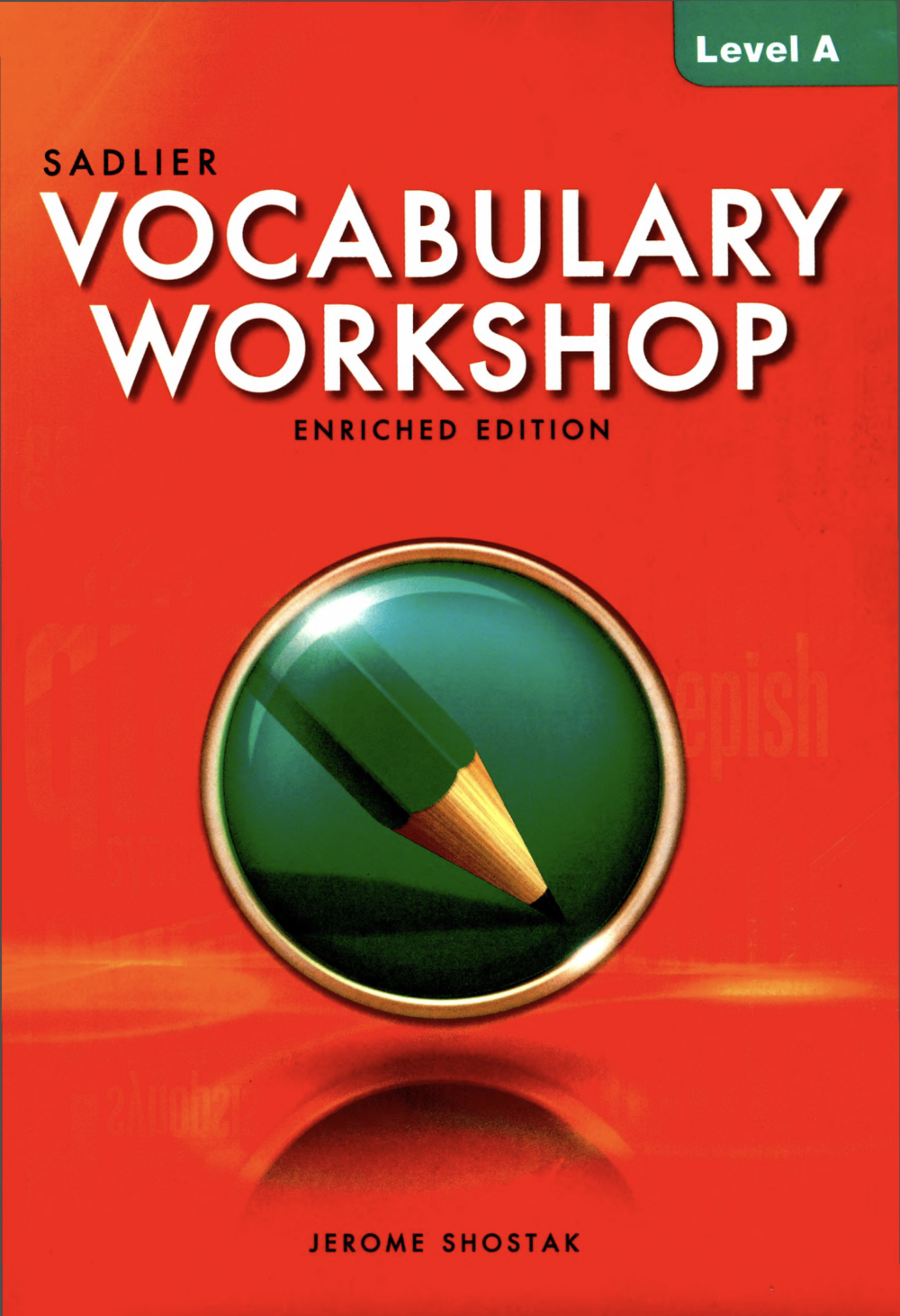
workshop level a
Workshop Level A is a Grade 5 vocabulary textbook that guides students through 15 units of structured word study, organized across five chapters. The program builds students' vocabulary skills through the systematic introduction of new words, covering definitions, usage in context, synonyms, antonyms, and word relationships. Each unit progressively strengthens reading comprehension and written expression by equipping students with the precise language needed for academic success across subject areas.
Chapters & Lessons
Chapter 1: Units 1-3
3 lessonsChapter 2: Units 4-6
3 lessonsIn this Grade 5 vocabulary lesson from Workshop Level A, students study key terms such as partisan, befuddle, agenda, leeway, induce, and compliant within the context of World War I propaganda. The passage traces how the U.S. Committee on Public Information used posters, pamphlets, and images to build public support for the war, giving students real historical examples to anchor each word's meaning. Exercises reinforce spelling, definitions, synonyms, and antonyms for all Unit 6 vocabulary words.
Chapter 3: Units 7-9
3 lessonsIn this Grade 5 vocabulary lesson from Workshop Level A, Chapter 3 (Units 7–9), students study key vocabulary words including prevaricating, authorize, culprit, persevered, gullible, and testimonial through an informational essay about the history of sunglasses. The lesson guides students to understand word meanings in context, explore synonyms and antonyms, and practice using each term correctly in sentences. This unit builds both reading comprehension and vocabulary skills essential for Grade 5 language arts.
In this Grade 5 vocabulary lesson from Workshop Level A, Chapter 3 (Units 7–9), students study key terms such as affluence, arrears, cascade, cringe, innovation, partition, and nimble through an interview-style passage about circus history and aerialist Mike Quintus Bessy. The lesson builds vocabulary skills by presenting boldface words in context, followed by definitions, illustrative sentences, and synonym and antonym study. Students practice recognizing and applying these words while reading about the origins of the modern circus and the life of performer Philip Astley.
Chapter 4: Units 10-12
3 lessonsChapter 5: Units 13-15
3 lessonsIn this Grade 5 vocabulary lesson from Workshop Level A, Chapter 5, students explore words such as adhere, affirm, deter, disquieting, and misapprehension through a compare-and-contrast essay about the Arctic and Antarctic regions. The lesson builds vocabulary comprehension by presenting boldface terms in context and pairing each word with its pronunciation, definition, and lists of synonyms and antonyms. Students practice recognizing and applying these terms as they examine the geographic, climatic, and cultural differences between Earth's two polar regions.
Frequently Asked Questions
- Is Workshop Level A the right vocabulary textbook for my fifth grader?
- Workshop Level A is a Grade 5 vocabulary program that organizes word study into 15 units across 5 chapters, building vocabulary through context-based learning rather than isolated word lists. It is a solid supplemental vocabulary program for students who need to expand their academic vocabulary and strengthen reading comprehension. It works best alongside your child's main ELA curriculum rather than as a standalone program. If your child reads below grade level or struggles to express ideas precisely in writing, the systematic word exposure in Workshop Level A can make a meaningful difference in both comprehension and written expression.
- Which parts of Workshop Level A tend to be hardest for fifth graders?
- Because the lessons are tied to themed reading passages - topics like ancient cities of gold, Olympic history, and school events - students who are slower readers may spend more energy decoding the passages than focusing on the vocabulary words. The synonym and antonym exercises require nuanced understanding of word relationships that goes beyond simple definitions, which trips up students who memorized meanings without truly understanding usage. Units in the later chapters typically introduce more sophisticated academic vocabulary that requires broader prior knowledge to fully grasp.
- My child struggles with vocabulary in context. Where should they start in Workshop Level A?
- Start with Unit 1 (City of Gold) and focus on the passage first - read it aloud together if needed - before introducing the target words. Context should come before definition: ask your child what they think a word means based on how it is used in the sentence before looking it up. This inference habit is the core skill Workshop Level A is designed to build. Make sure your child can use each new word correctly in an original sentence before moving to the next unit. Three to five words learned deeply is better than fifteen words learned superficially.
- My child just finished Workshop Level A. What vocabulary program should they use next?
- Workshop Level B covers Grade 6 vocabulary and continues the same context-based approach with more sophisticated passages and academic words appropriate for middle school. For students who thrive with the root-based approach, Vocabulary from Classical Roots Book D is an excellent complement that teaches Greek and Latin roots systematically. For students whose reading level is strong, moving to content-area vocabulary in science and social studies - learning words from actual subject reading rather than vocabulary workbooks - is the most efficient path to expanding academic vocabulary in middle school.
- How can Pengi help my child with Workshop Level A?
- Pengi can turn vocabulary practice into active conversation rather than passive workbook exercises. For any unit in Workshop Level A, Pengi can quiz your child on word meanings, ask them to use words in sentences, and test whether they can distinguish synonyms from antonyms correctly. If a word from a unit is not sticking - something like comestible or a less familiar academic term - Pengi can provide multiple examples of the word used in different contexts until the meaning becomes intuitive. Pengi can also generate short passages using the unit vocabulary words to give your child more reading-in-context practice.
Ready to start learning?
Jump into your first lesson for workshop level a. Free, no account required.
Start Learning